
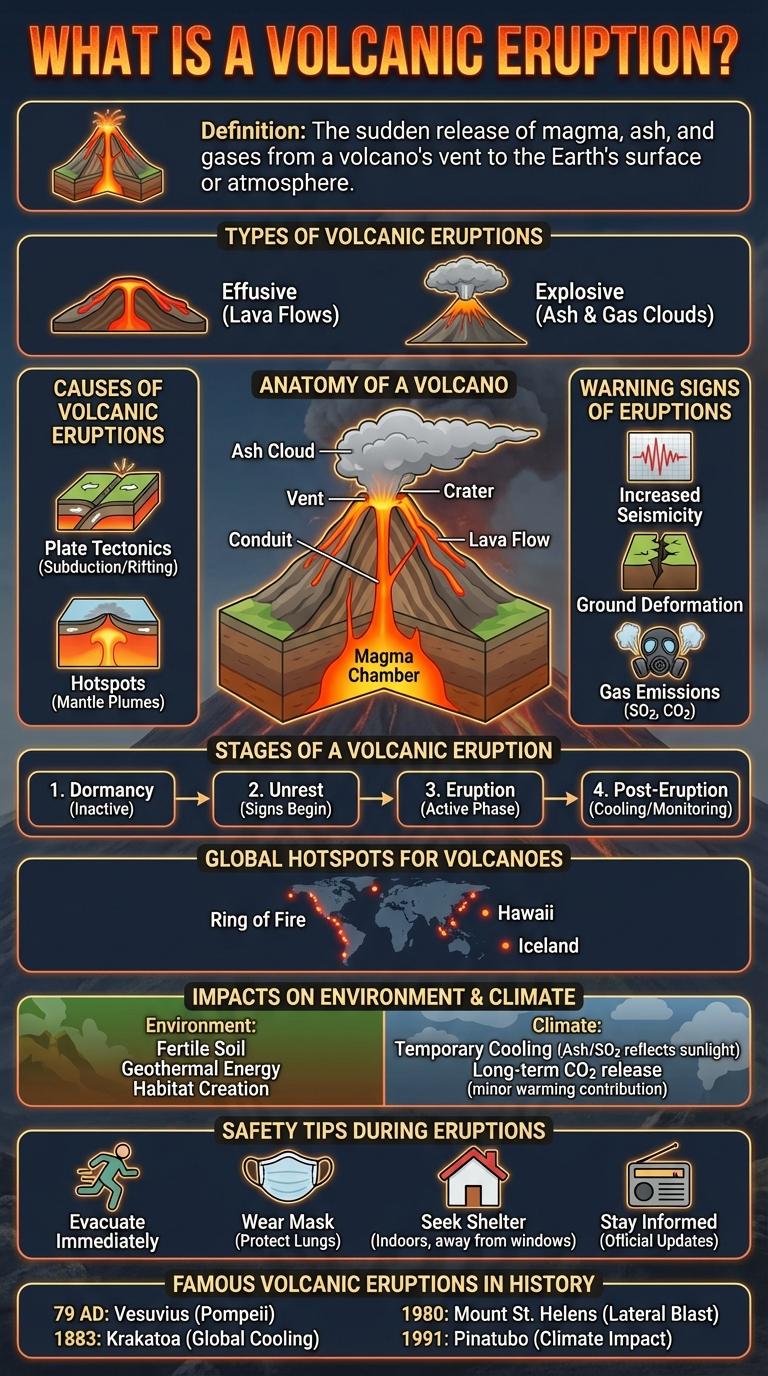
Volcanic eruptions unleash powerful forces that shape landscapes and impact ecosystems worldwide. Understanding the sequence of events and key components involved helps visualize the dynamic process of magma rising, gas release, and explosive bursts. Infographics serve as effective tools to simplify complex geological data and enhance comprehension of volcanic activity.
What Is a Volcanic Eruption?
A volcanic eruption occurs when magma, gases, and ash escape from a magma chamber beneath the Earth's surface. This process results in the explosive release of molten rock and volcanic debris.
The eruption begins as pressure builds in the magma chamber, forcing magma to rise through cracks in the Earth's crust. When the pressure becomes too great, it causes an explosive burst, sending lava, ash clouds, and volcanic gases into the atmosphere. These eruptions can vary in intensity, from gentle lava flows to violent explosions that shape the landscape and affect global climate.
Types of Volcanic Eruptions
What are the main types of volcanic eruptions? Volcanic eruptions vary based on magma composition and eruption style. Understanding these types helps predict eruption behavior and potential hazards.
| Type | Description |
|---|---|
| Hawaiian | Effusive eruptions producing fluid basaltic lava flows with low explosivity. |
| Strombolian | Moderate bursts of expanding gases eject volcanic bombs and lapilli. |
| Vulcanian | Short, explosive eruptions emitting ash clouds and pyroclastic fragments. |
| Pelean | Powerful explosions generating pyroclastic flows and glowing avalanches. |
| Plinian | Highly explosive eruptions sending high ash columns into the stratosphere. |
Anatomy of a Volcano
Volcanoes are geological formations created by the eruption of molten rock, ash, and gases from beneath the Earth's surface. The anatomy of a volcano includes key structures such as the magma chamber, conduit, vent, and crater.
The magma chamber is a reservoir of molten rock located beneath the volcano. Magma travels upward through the conduit, eventually exiting the surface through the vent, which forms the crater at the top of the volcano.
Causes of Volcanic Eruptions
Volcanic eruptions occur when magma from beneath the Earth's crust escapes to the surface. These eruptions result from various geological processes driving pressure and heat upward.
- Magma Chamber Pressure - Increasing pressure in a magma chamber forces magma to rise through cracks and fissures, leading to an eruption.
- Tectonic Plate Movement - Shifting or colliding tectonic plates create fractures that allow magma to ascend and erupt.
- Gas Build-up - Accumulated volcanic gases increase pressure within magma, causing explosive volcanic activity.
Warning Signs of Eruptions
Volcanic eruptions often exhibit clear warning signs that help scientists predict imminent activity. Recognizing these signs is crucial for early evacuation and disaster preparedness.
- Increased Seismic Activity - Frequent earthquakes around a volcano indicate magma movement beneath the surface.
- Gas Emissions - Rising levels of sulfur dioxide and other volcanic gases signal pressurizing magma.
- Ground Deformation - Swelling or bulging of the volcano's surface reveals magma accumulation underground.
Stages of a Volcanic Eruption
A volcanic eruption unfolds through distinct stages, beginning with the buildup of magma beneath the Earth's surface. Pressure increases as magma accumulates, causing cracks and fractures in surrounding rock. The eruption culminates with the explosive release of gases, lava, and ash, reshaping the landscape.
Global Hotspots for Volcanoes
Volcanic eruptions predominantly occur along tectonic plate boundaries where magma escapes to the Earth's surface. Major global hotspots for volcanoes include the Pacific Ring of Fire, the East African Rift, and the Mediterranean Belt. These regions experience frequent volcanic activity due to subduction zones, rifting, and hotspot volcanism.
Impacts on Environment & Climate
| Impact Category | Description |
|---|---|
| Atmospheric Effects | Volcanic eruptions release large quantities of ash and gases such as sulfur dioxide (SO2), which form sulfate aerosols that reflect sunlight and cause short-term global cooling. |
| Climate Change | The injection of volcanic aerosols into the stratosphere can reduce global temperatures for 1 to 3 years, affecting weather patterns and agriculture worldwide. |
| Air Quality | Volcanic ash and gases degrade air quality, leading to respiratory problems for humans and animals and harming plant life. |
| Ecosystem Disruption | Lava flows, ashfall, and pyroclastic materials destroy habitats, alter soil composition, and disrupt local flora and fauna diversity. |
| Oceanic Impact | Volcanic ash deposited in oceans can modify nutrient levels, leading to algal blooms or disruptions in marine ecosystems. |
Safety Tips During Eruptions
Volcanic eruptions pose significant risks including lava flows, ash fall, and pyroclastic surges. Understanding and following safety measures can save lives during such natural disasters.
Evacuate immediately when authorities issue warnings to avoid lava and toxic gas exposure. Stay indoors if ash is falling, seal windows and doors, and wear masks to protect your lungs.