
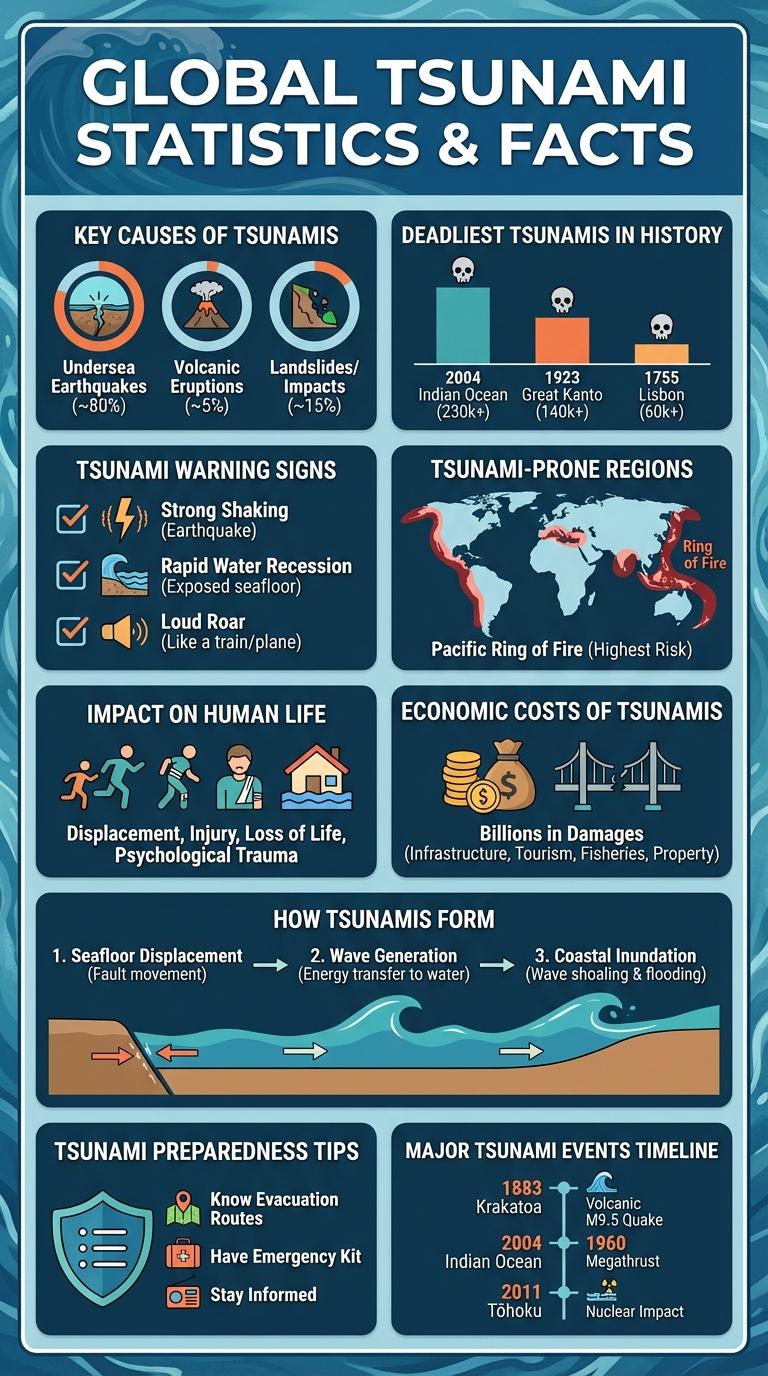
Tsunami data offers critical insights into the frequency, magnitude, and impact of these powerful natural disasters. Visualizing this information through an infographic aids in understanding patterns and preparedness measures effectively. Key data points include wave height, earthquake triggers, affected regions, and historical occurrence timelines.
Global Tsunami Statistics
Global tsunami occurrences have increased over the past century, with over 2,000 events recorded worldwide. The Pacific Ocean is the most affected region, accounting for approximately 80% of all tsunamis due to its active tectonic plate boundaries. Tsunami-related fatalities exceed 250,000, highlighting the urgent need for improved early warning systems and coastal preparedness.
Key Causes of Tsunamis
| Cause | Description |
|---|---|
| Underwater Earthquakes | Most tsunamis result from seismic activity along tectonic plate boundaries beneath the ocean floor. |
| Volcanic Eruptions | Submarine or coastal volcanic eruptions can displace large volumes of water, triggering tsunamis. |
| Landslides | Massive landslides into or under the ocean rapidly push water, causing tsunami waves. |
| Meteorite Impacts | Rare but powerful, large meteorite impacts in oceans generate tsunami waves by sudden water displacement. |
Deadliest Tsunamis in History
The deadliest tsunamis in history have caused catastrophic loss of life and widespread destruction. The 2004 Indian Ocean tsunami stands as the most lethal, with an estimated 230,000 to 280,000 fatalities across multiple countries. Other significant events include the 1755 Lisbon tsunami and the 2011 Tohoku tsunami in Japan, both marked by immense human and economic impact.
| Year | Death Toll |
|---|---|
| 2004 | 230,000 - 280,000 |
| 1755 | 30,000 - 50,000 |
| 2011 | 15,000 - 20,000 |
| 1883 | 36,000 |
| 1946 | 1,500 - 1,800 |
Tsunami Warning Signs
Tsunami warning signs provide critical indicators to help people react quickly and safely. Recognizing these signs can save lives by prompting timely evacuations.
- Rapid Water Recession - The ocean suddenly pulls back, exposing the seabed, creating a dangerous gap before the tsunami wave arrives.
- Unusual Ocean Behavior - Water may appear unusually turbulent, choppy, or frothy, signaling seismic activity beneath the sea.
- Loud Ocean Roar - A roaring or rumbling sound from the ocean often precedes the tsunami wave and serves as an auditory warning.
Being aware of these natural tsunami warning signs is essential for immediate action and safety.
Tsunami-Prone Regions
Tsunamis primarily impact coastal regions located along the Pacific Ocean's "Ring of Fire," an area characterized by frequent seismic activity. Countries such as Japan, Indonesia, and Chile are among the most tsunami-prone due to their proximity to tectonic plate boundaries.
The Indian Ocean and parts of the Mediterranean Sea also face tsunami risks, though less frequently. Coastal communities in these regions often implement early warning systems to mitigate damage and save lives.
Impact on Human Life
How do tsunamis impact human life worldwide?
Tsunamis cause significant loss of life and injury, particularly in coastal regions. Emergency response and early warning systems play a crucial role in reducing casualties.
Economic Costs of Tsunamis
The economic costs of tsunamis represent a significant burden on affected regions, often reaching billions of dollars. Infrastructure damage and loss of livelihoods drive these financial impacts, requiring extensive recovery efforts.
Understanding the economic toll helps in planning and implementing more effective disaster risk management strategies.
- Destruction of Infrastructure - Tsunamis cause widespread damage to roads, bridges, and buildings, leading to expensive repairs and reconstruction.
- Loss of Tourism Revenue - Coastal areas hit by tsunamis often see declines in tourism, impacting local economies dependent on this sector.
- Emergency Response and Recovery Costs - Immediate relief operations and long-term rebuilding demand large financial investments from governments and aid organizations.
How Tsunamis Form
Tsunamis form primarily due to underwater seismic activity such as earthquakes, volcanic eruptions, or landslides. These events displace large volumes of water, generating powerful waves that travel across oceans.
The sudden uplift or subsidence of the seafloor causes water to surge outward in all directions. These waves can travel at speeds up to 500 miles per hour, gaining height as they approach shallow coastal areas.
Tsunami Preparedness Tips
Tsunamis pose a significant threat to coastal regions, requiring proactive preparedness to minimize risk. Understanding key safety measures can save lives during such disasters.
When you receive a tsunami warning, evacuate immediately to higher ground away from the shore. Prepare an emergency kit with essentials like water, food, and medical supplies. Stay informed through official alerts until authorities declare the area safe.