
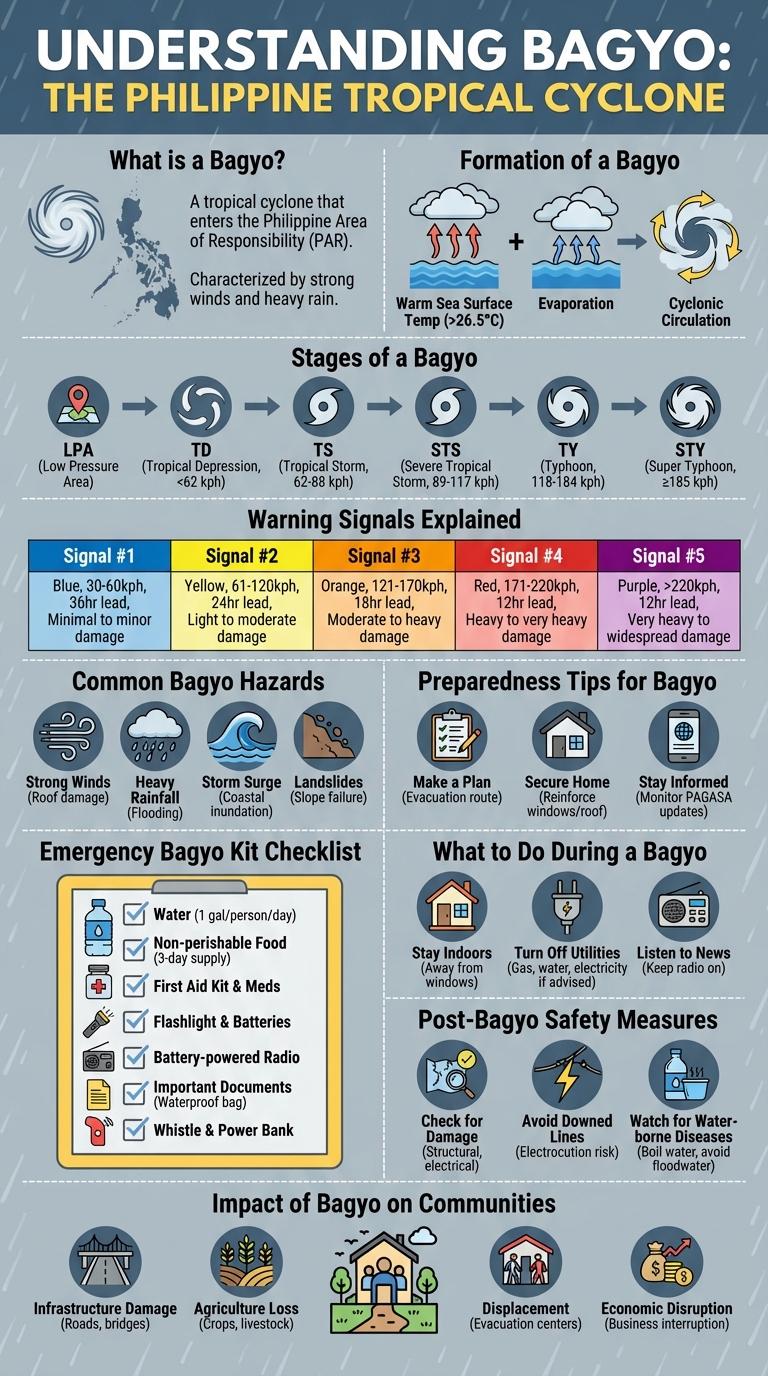
Bagyo, or tropical cyclones, often bring intense rain, strong winds, and widespread flooding that impact communities and infrastructure. Understanding the formation, effects, and safety measures of bagyo is crucial for disaster preparedness and response. This infographic visually presents key information to help individuals stay informed and protected during bagyo events.
What is a Bagyo?
A Bagyo is a tropical cyclone that commonly affects the Philippines, causing heavy rains and strong winds. It is a weather phenomenon known for its impact on the environment and communities.
- Formation - Bagyos develop over warm ocean waters, typically between June and November in the Western Pacific region.
- Intensity - They are categorized based on wind speeds, ranging from tropical depressions to super typhoons.
- Impact - Bagyos often lead to flooding, landslides, and damage to infrastructure, affecting livelihoods and safety.
Formation of a Bagyo
Bagyo, or tropical cyclones, form over warm ocean waters with temperatures above 26.5degC. The heat fuels the storm, causing moist air to rise and create low pressure at the surface.
As the air rises, it cools and condenses, releasing energy which intensifies the cyclone. Winds spiral inward due to the Coriolis effect, organizing the storm into a rotating system.
Stages of a Bagyo
Bagyo, or typhoon, is a powerful tropical cyclone that affects the Philippines and neighboring regions. Understanding its stages helps in preparedness and timely response to minimize damage and ensure safety.
- Formation - A bagyo begins as a low-pressure area over warm ocean waters, gathering moisture and energy.
- Development - The system intensifies, winds strengthen, and organized storm clouds form around the center.
- Maturity - The bagyo reaches peak strength with maximum sustained winds, heavy rainfall, and storm surges affecting land areas.
- Dissipation - The storm weakens upon moving over cooler waters or land, losing energy and breaking apart.
- Aftereffects - Flooding, landslides, and infrastructure damage occur, requiring recovery and rehabilitation efforts.
Warning Signals Explained
| Warning Signal | Meaning |
|---|---|
| Tropical Cyclone Wind Signal #1 | Winds of 30-60 kph expected within 36 hours |
| Tropical Cyclone Wind Signal #2 | Winds of 61-120 kph expected within 24 hours |
| Tropical Cyclone Wind Signal #3 | Winds of 121-170 kph expected within 18 hours |
| Tropical Cyclone Wind Signal #4 | Winds of 171-220 kph expected within 12 hours |
| Tropical Cyclone Wind Signal #5 | Winds greater than 220 kph expected within 12 hours |
Common Bagyo Hazards
What are the common hazards associated with a bagyo? Bagyo often brings heavy rainfall leading to widespread flooding. Strong winds from the storm can cause extensive property damage and uproot trees.
How does a bagyo affect transportation and infrastructure? Flooded roads and collapsed bridges disrupt travel and communication. Power outages frequently occur due to damaged electrical lines.
What health risks arise during a bagyo? Waterborne diseases increase as floodwaters contaminate drinking sources. Injuries and fatalities may result from flying debris and accidents.
Why is landslide a concern during a bagyo? Continuous heavy rain saturates the ground, triggering landslides on slopes. Landslides can bury homes and block critical evacuation routes.
What impacts do strong winds cause in a bagyo? Winds exceeding 100 kph can destroy roofs and topple trees. These effects often lead to dangerous rescue conditions and long recovery times.
Preparedness Tips for Bagyo
Bagyo, or tropical cyclones, pose significant risks including strong winds, heavy rainfall, and flooding. Preparedness is crucial to minimize damage and protect lives. Effective measures include securing homes, preparing emergency kits, and staying informed through official weather updates.
Emergency Bagyo Kit Checklist
A Bagyo, or typhoon, can bring severe weather conditions that demand preparedness. Having an emergency bagyo kit ensures safety and quick response during such events.
Essential items in a bagyo emergency kit include drinking water, non-perishable food, and a flashlight with extra batteries. First aid supplies, important documents, and extra clothing should also be part of the kit. Preparing these items in advance helps families stay protected and manage emergencies effectively.
What to Do During a Bagyo
During a bagyo, stay indoors and away from windows to ensure safety from strong winds and flying debris. Keep emergency supplies such as water, food, flashlight, and first aid kit within reach. Listen to updates from local authorities to stay informed about evacuation orders and weather conditions.
Post-Bagyo Safety Measures
Post-bagyo safety measures are critical to ensure community recovery and prevent further accidents after a typhoon. These steps focus on health, infrastructure, and timely information dissemination.
- Inspect and repair homes - Check for structural damages and fix them to prevent hazards and ensure safe shelter.
- Clear debris and floodwater - Remove fallen trees and stagnant water to reduce the risk of disease and restore accessibility.
- Monitor water quality - Test drinking water sources to avoid waterborne illnesses commonly following a bagyo.
Effective post-bagyo safety measures support faster recovery and protect public health.