
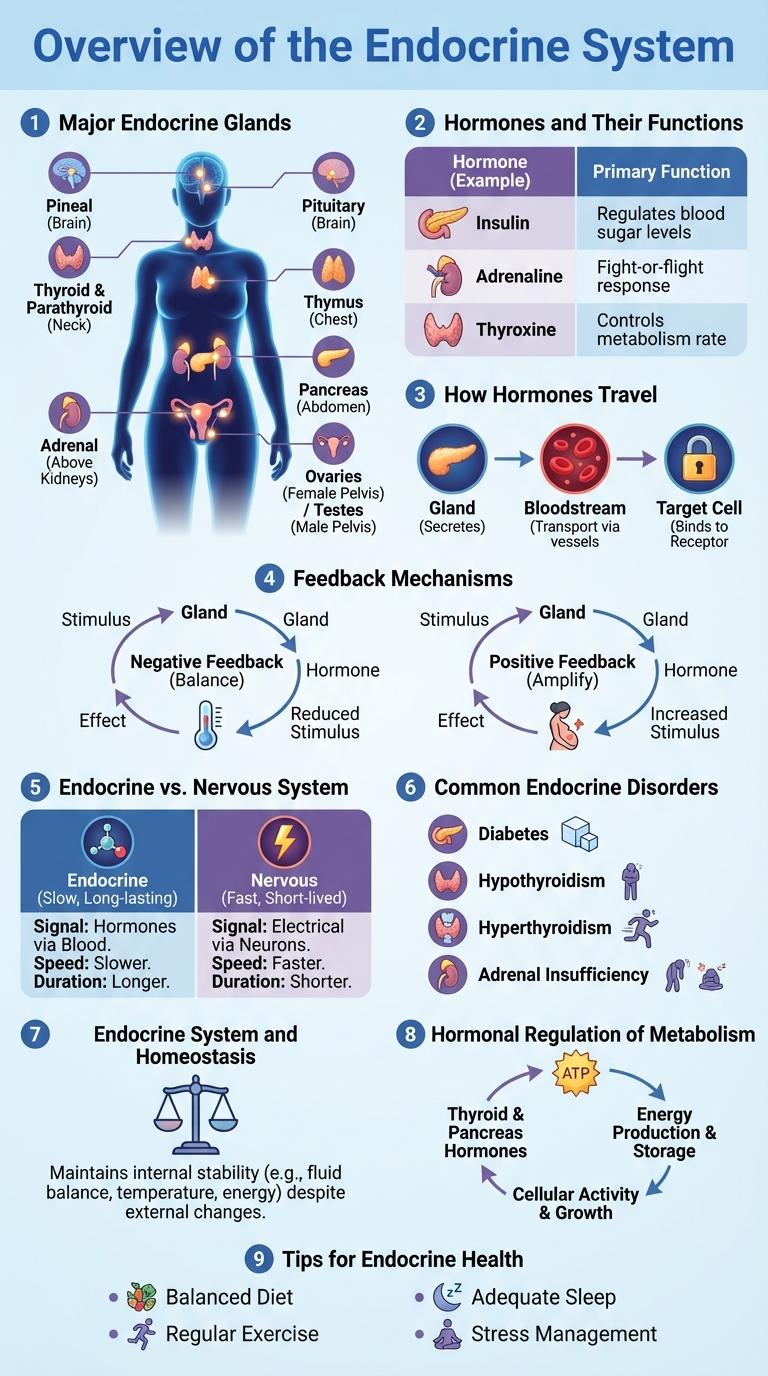
The endocrine system regulates vital bodily functions through hormone secretion by glands such as the pituitary, thyroid, and adrenal glands. These hormones control growth, metabolism, reproduction, and mood, maintaining the body's internal balance. Understanding this system's components and their interactions is essential for recognizing how the body sustains health and responds to changes.
Overview of the Endocrine System
The endocrine system is a network of glands that produce and release hormones to regulate various body functions. It plays a crucial role in maintaining homeostasis by controlling metabolism, growth, and reproduction.
Major glands include the pituitary, thyroid, adrenal, pancreas, and gonads. Hormones act as chemical messengers, traveling through the bloodstream to target organs. This system works in close collaboration with the nervous system to ensure balanced physiological processes.
Major Endocrine Glands
The endocrine system regulates vital bodily functions through hormone secretion. It consists of several major glands that control growth, metabolism, and reproduction.
- Pituitary Gland - Often called the "master gland," it controls other endocrine glands and regulates growth and fluid balance.
- Thyroid Gland - Produces hormones that regulate metabolism, energy, and calcium balance.
- Adrenal Glands - Located above the kidneys, they release hormones involved in stress response and metabolism regulation.
- Pineal Gland - Secretes melatonin to regulate sleep-wake cycles and circadian rhythms.
- Pancreas - Produces insulin and glucagon to control blood sugar levels.
Understanding these major endocrine glands highlights their crucial role in maintaining homeostasis and overall health.
Hormones and Their Functions
| Hormone | Function |
|---|---|
| Insulin | Regulates blood glucose levels by facilitating cellular glucose uptake |
| Thyroxine (T4) | Controls metabolic rate and supports growth and development |
| Adrenaline (Epinephrine) | Prepares the body for 'fight or flight' response through increased heart rate and energy release |
| Estrogen | Regulates female reproductive system and secondary sexual characteristics |
| Cortisol | Manages stress response and modulates metabolism of proteins, fats, and carbohydrates |
How Hormones Travel
The endocrine system relies on hormones, chemical messengers produced by glands, to regulate various bodily functions. Hormones travel through the bloodstream to reach target organs and tissues.
Once released, hormones bind to specific receptors on target cells, triggering precise biological responses. This signaling method ensures that the body maintains homeostasis and responds to internal and external changes effectively.
Feedback Mechanisms
The endocrine system regulates hormones through precise feedback mechanisms that maintain homeostasis. Negative and positive feedback loops control hormone levels to balance bodily functions.
- Negative Feedback - Hormone secretion decreases when target organ hormone levels reach an optimal point to prevent overproduction.
- Positive Feedback - Hormone release amplifies in response to stimuli, enhancing physiological processes temporarily.
- Hypothalamic-Pituitary Axis - Central regulator coordinating hormone secretion via feedback from peripheral glands.
Endocrine vs. Nervous System
The endocrine system uses hormones released into the bloodstream to regulate bodily functions, while the nervous system transmits electrical signals through neurons for rapid communication. Hormonal responses are slower but longer-lasting, affecting processes like growth, metabolism, and reproduction. In contrast, the nervous system controls immediate responses such as reflexes and muscle movements with precise, fast signaling.
Common Endocrine Disorders
The endocrine system regulates hormones essential for bodily functions. Common endocrine disorders include diabetes, hypothyroidism, and adrenal insufficiency. Early diagnosis and treatment can improve quality of life and prevent complications.
| Disorder | Key Symptoms |
|---|---|
| Diabetes Mellitus | High blood sugar, excessive thirst, fatigue |
| Hypothyroidism | Fatigue, weight gain, cold intolerance |
| Adrenal Insufficiency | Fatigue, muscle weakness, low blood pressure |
| Hyperthyroidism | Weight loss, anxiety, rapid heartbeat |
Endocrine System and Homeostasis
The endocrine system regulates vital body functions through hormone secretion to maintain homeostasis. Hormones act as chemical messengers, ensuring internal balance despite external changes.
- Hormone Regulation - Endocrine glands release hormones that control metabolism, growth, and fluid balance.
- Feedback Mechanisms - Negative feedback loops adjust hormone levels to stabilize body conditions.
- Organ Interaction - The endocrine system works with the nervous system to coordinate responses for homeostasis.
Hormonal Regulation of Metabolism
The endocrine system plays a crucial role in regulating metabolism through hormone secretion. Key hormones such as insulin, glucagon, and thyroid hormones maintain energy balance by controlling glucose and lipid levels.
Insulin lowers blood glucose by promoting its uptake and storage, while glucagon increases glucose availability during fasting. Thyroid hormones accelerate metabolic processes, influencing overall energy expenditure and body temperature.