
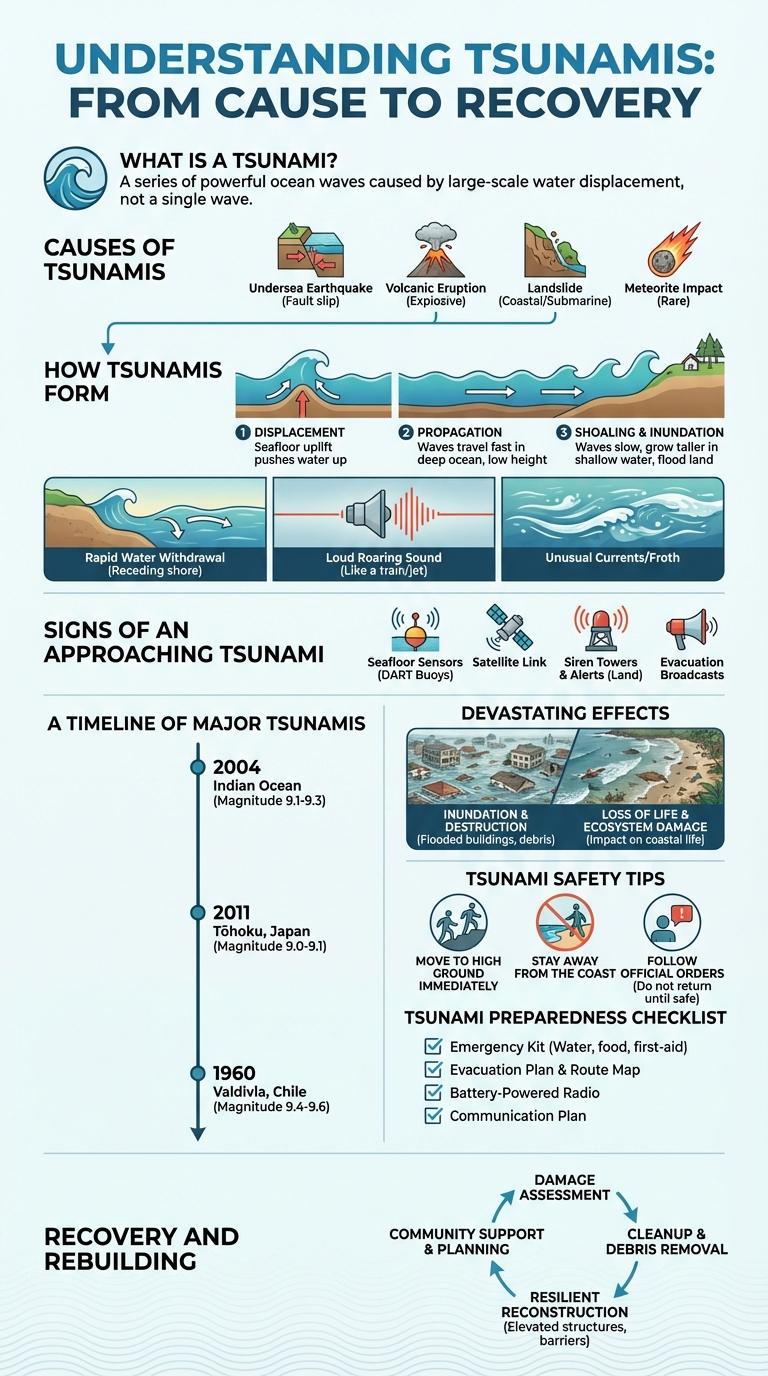
A tsunami is a series of powerful ocean waves caused by underwater earthquakes, volcanic eruptions, or landslides that displace large volumes of water. These waves can travel at high speeds across entire ocean basins, causing widespread devastation when they reach coastal areas. Infographics help visualize the causes, effects, and safety measures related to tsunamis, making complex information more accessible and easier to understand.
What is a Tsunami?
A tsunami is a series of large ocean waves caused by underwater disturbances such as earthquakes or volcanic eruptions. These waves can travel at high speeds across the ocean and cause significant destruction upon reaching coastal areas.
Understanding the causes and effects of tsunamis is crucial for disaster preparedness and minimizing damage.
- Origin - Tsunamis are primarily triggered by seismic activity beneath the ocean floor.
- Wave Behavior - Unlike regular waves, tsunami waves have long wavelengths and can travel at speeds up to 500 mph.
- Impact - When tsunami waves reach shallow coastal waters, their height increases dramatically, leading to flooding and destruction.
Causes of Tsunamis
| Cause | Description |
|---|---|
| Underwater Earthquakes | Sudden tectonic plate movements displace large volumes of water, generating powerful tsunami waves. |
| Volcanic Eruptions | Explosive underwater or coastal volcanic activity can trigger water displacement, leading to tsunamis. |
| Submarine Landslides | Massive sediment shifts under the ocean cause rapid water movement, creating tsunami waves. |
| Meteorite Impacts | Large meteorites hitting oceans displace water instantly, potentially causing massive tsunamis. |
| Glacial Calving | Large icebergs breaking off glaciers into the ocean generate localized tsunami waves. |
Signs of an Approaching Tsunami
Tsunamis are powerful ocean waves caused by underwater earthquakes or volcanic eruptions. Recognizing the warning signs can save lives by allowing timely evacuation.
Early signs of a tsunami often occur before the massive waves hit the shore. Knowing these indicators is crucial for beachgoers and coastal residents.
- Rapid Water Recession - The sea suddenly withdraws far beyond the normal shoreline, exposing the ocean floor and marine life.
- Strong Earthquake - Feeling a noticeable earthquake near the coast can precede a tsunami, especially if it lasts more than 20 seconds.
- Loud Ocean Roar - A strange, loud roaring sound like a train or jet engine may be heard as the tsunami approaches.
How Tsunamis Form
Tsunamis form primarily due to underwater seismic activities such as earthquakes, volcanic eruptions, or landslides. These events displace large volumes of water, generating powerful waves that travel across oceans at high speeds.
The initial wave height may be small in deep water, but as the tsunami approaches shallow coastal areas, wave energy compresses, causing wave height to increase dramatically. This rapid rise creates devastating impacts on coastal communities when the tsunami makes landfall.
Tsunami Warning Systems
Tsunami warning systems are essential for detecting undersea earthquakes and alerting coastal communities. These systems use a network of sensors to monitor seismic activity and ocean changes in real-time.
Seismic sensors detect earthquakes, while deep-ocean pressure sensors measure abnormal water displacement. Data is transmitted to warning centers that analyze the risk of a tsunami. Rapid alerts are then sent via sirens, mobile messages, and broadcast systems to ensure timely evacuations.
A Timeline of Major Tsunamis
What are some of the most significant tsunamis in history? Major tsunamis have caused widespread destruction and loss of life across various regions of the world. Understanding their timeline helps in disaster preparedness and risk reduction.
| Year | Major Tsunami Event |
|---|---|
| 1755 | Lisbon, Portugal Tsunami - Triggered by a massive earthquake, this event devastated the city and surrounding areas. |
| 1883 | Krakatoa, Indonesia Tsunami - Resulted from volcanic eruption, caused massive waves affecting coastlines far away. |
| 1946 | Aleutian Islands Tsunami - Originated from an undersea earthquake, caused deaths in Hawaii due to tsunami waves. |
| 2004 | Indian Ocean Tsunami - One of the deadliest, it followed a magnitude 9.1 earthquake, affecting multiple countries. |
| 2011 | Japan Tsunami - Triggered by a magnitude 9.0 earthquake, causing extensive damage and nuclear plant crises. |
Devastating Effects of Tsunamis
Tsunamis unleash immense energy, causing widespread destruction along coastlines. They can obliterate entire communities within minutes, leading to enormous loss of life and property.
The powerful waves destroy infrastructure, contaminate freshwater supplies, and disrupt ecosystems. Recovery from a tsunami often takes years due to the extensive damage to homes, transportation, and agriculture.
Tsunami Safety Tips
Tsunamis are powerful ocean waves caused by underwater earthquakes or volcanic eruptions, posing significant risks to coastal areas. Knowing how to respond quickly during a tsunami warning can save lives and reduce injuries. Follow safety tips such as moving to higher ground immediately, avoiding the beach, and listening to emergency broadcasts for updates.
Tsunami Preparedness Checklist
Tsunamis pose significant risks to coastal communities worldwide. Being prepared can save lives and minimize damage.
- Know Evacuation Routes - Familiarize yourself with local tsunami evacuation routes and safe zones before an emergency.
- Emergency Kit Ready - Prepare a kit with water, food, medications, flashlight, and important documents to last at least 72 hours.
- Stay Informed - Keep a battery-powered radio or smartphone with alerts enabled to receive timely tsunami warnings.
- Secure Property - Elevate utilities and reinforce structures to reduce flood damage in the event of a tsunami.
- Practice Drills - Regularly participate in tsunami evacuation drills to ensure quick and safe response during an actual event.
Following a tsunami preparedness checklist enhances community resilience during emergencies.