
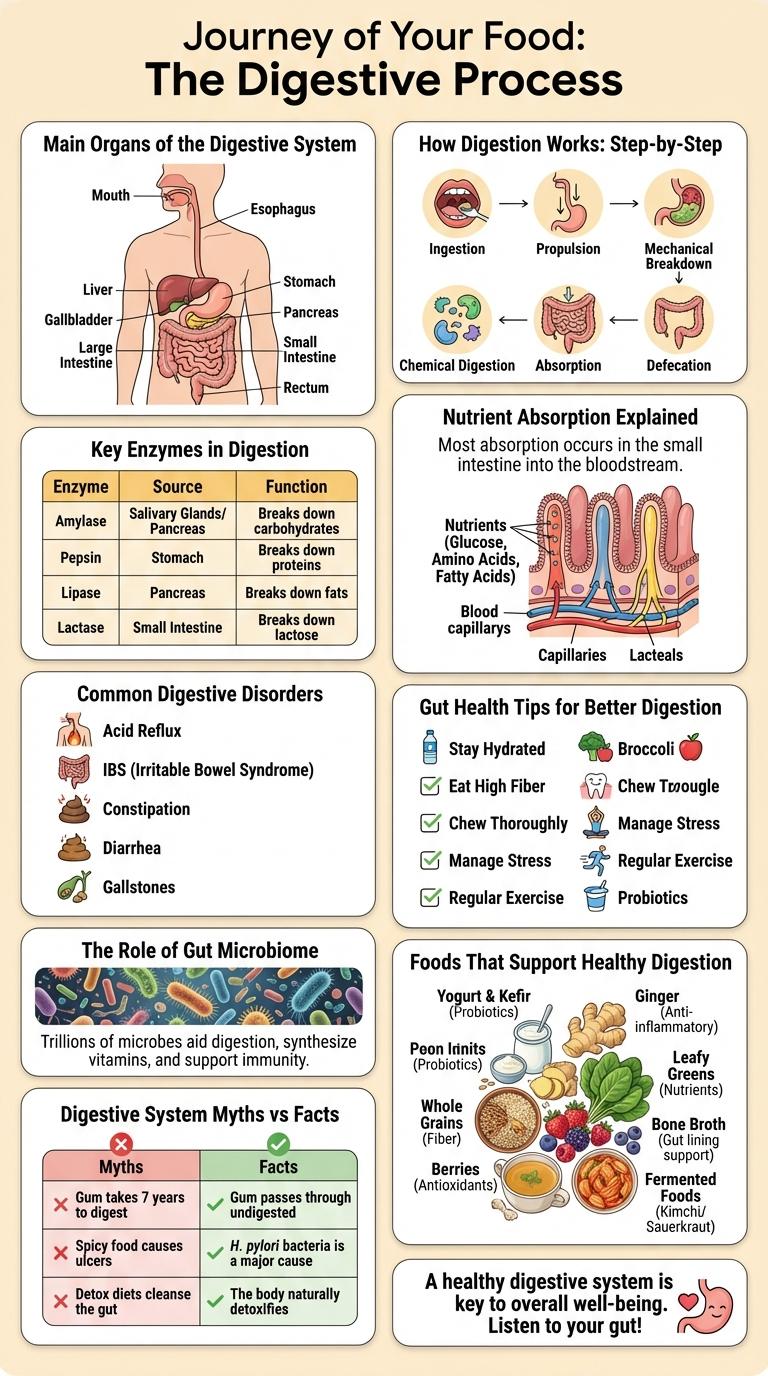
The digestive system efficiently breaks down food into essential nutrients that the body absorbs for energy and growth. It involves organs such as the mouth, esophagus, stomach, intestines, liver, and pancreas working in harmony. Understanding this complex process enhances awareness of how nutrition impacts overall health and well-being.
Journey of Your Food: The Digestive Process
The digestive system transforms the food you eat into essential nutrients your body needs for energy, growth, and repair. The journey begins in the mouth, where chewing and saliva start breaking down food, then continues through the esophagus to the stomach for further digestion. Nutrients are absorbed in the small intestine, while waste is compacted in the large intestine before being eliminated.
Main Organs of the Digestive System
The digestive system is responsible for breaking down food into nutrients that the body can absorb and use. It consists of several main organs that work together to ensure efficient digestion and nutrient absorption.
- Mouth - The starting point of digestion where mechanical chewing and enzymatic saliva break down food.
- Esophagus - A muscular tube that transports food from the mouth to the stomach through peristaltic movements.
- Stomach - A hollow organ that mixes food with gastric juices to form chyme and initiates protein digestion.
- Small Intestine - The primary site for nutrient absorption where enzymes from the pancreas and bile from the liver aid digestion.
- Large Intestine - Absorbs water and electrolytes, forming solid waste to be excreted from the body.
How Digestion Works: Step-by-Step
How does the digestive system break down food for the body? The digestive system processes food through a series of organs that work together to convert food into nutrients. Each step plays a crucial role in extracting energy and essential nutrients from what we eat.
What happens in the mouth during digestion? The mouth begins digestion by mechanically breaking down food with chewing and mixing it with saliva. Saliva contains enzymes that start breaking down carbohydrates into simpler sugars.
What role does the stomach play in digestion? The stomach churns the food and mixes it with gastric juices containing acid and enzymes. These substances help break down proteins and kill harmful bacteria.
How does the small intestine contribute to nutrient absorption? The small intestine is the main site where nutrients are absorbed into the bloodstream. Its lining has tiny finger-like projections called villi that increase surface area for maximum absorption.
What happens in the large intestine? The large intestine absorbs water and electrolytes from the remaining food matter. It also compacts waste into stool to be excreted through the rectum.
Key Enzymes in Digestion
The digestive system relies on specific enzymes to break down food into absorbable nutrients. These key enzymes target carbohydrates, proteins, and fats during digestion.
Amylase begins carbohydrate digestion by converting starches into simple sugars. Proteases such as pepsin and trypsin break down proteins into amino acids for absorption.
Nutrient Absorption Explained
| Digestive Organ | Role in Nutrient Absorption |
|---|---|
| Small Intestine | Main site for absorption of nutrients including carbohydrates, proteins, fats, vitamins, and minerals through villi and microvilli. |
| Stomach | Breaks down proteins into peptides; limited nutrient absorption, mainly alcohol and some drugs. |
| Large Intestine | Absorbs water, electrolytes, and certain vitamins like vitamin K and biotin produced by gut bacteria. |
| Pancreas | Secretes digestive enzymes that aid in breaking down nutrients for absorption in the small intestine. |
| Liver | Produces bile, essential for fat emulsification and absorption in the small intestine. |
Common Digestive Disorders
The digestive system plays a crucial role in breaking down food and absorbing nutrients essential for the body's functions. Various disorders can disrupt this process, leading to discomfort and health issues.
Common digestive disorders include acid reflux, irritable bowel syndrome (IBS), Crohn's disease, constipation, and celiac disease. Acid reflux causes stomach acid to flow back into the esophagus, resulting in heartburn. IBS is characterized by abdominal pain, bloating, and changes in bowel habits, while Crohn's disease involves inflammation of the digestive tract. Constipation refers to difficulty in passing stools, and celiac disease is an autoimmune reaction to gluten that damages the small intestine.
Gut Health Tips for Better Digestion
The digestive system plays a crucial role in breaking down food and absorbing nutrients essential for overall health. Maintaining good gut health can improve digestion, boost immunity, and enhance mental well-being. Simple habits such as a balanced diet, hydration, and regular exercise support a healthy digestive tract.
| Gut Health Tip | Description |
|---|---|
| Eat Fiber-Rich Foods | Fruits, vegetables, and whole grains promote regular bowel movements and feed beneficial gut bacteria. |
| Stay Hydrated | Drinking plenty of water aids digestion and prevents constipation. |
| Limit Processed Foods | Highly processed foods can disrupt gut microbiota and impair digestion. |
| Include Probiotics | Yogurt and fermented foods help maintain a balanced gut flora. |
| Exercise Regularly | Physical activity stimulates intestinal movement and supports digestive health. |
The Role of Gut Microbiome
The gut microbiome plays a crucial role in maintaining digestive health and overall well-being. This complex community of microorganisms influences nutrient absorption, immune function, and gut integrity.
- Microbial Diversity - A diverse microbiome supports efficient digestion and protects against harmful pathogens.
- Metabolic Activity - Gut bacteria ferment dietary fibers to produce short-chain fatty acids essential for colon health.
- Immune Regulation - The microbiome modulates immune responses, helping to prevent inflammation and autoimmune diseases.
Understanding the gut microbiome's role can lead to targeted therapies for digestive disorders and enhanced overall health.
Digestive System Myths vs Facts
The digestive system plays a vital role in breaking down food and absorbing nutrients necessary for the body. Many common beliefs about digestion are based on myths rather than scientific facts.
Myth: Spicy foods cause ulcers. Fact: Ulcers are primarily caused by Helicobacter pylori infection or long-term use of NSAIDs, not spicy foods.
Myth: Drinking milk increases mucus production. Fact: Research shows milk does not increase mucus and can be soothing during a sore throat.
Myth: You need to detox your digestive system regularly. Fact: The liver and kidneys naturally detoxify the body without special cleanses or diets.