
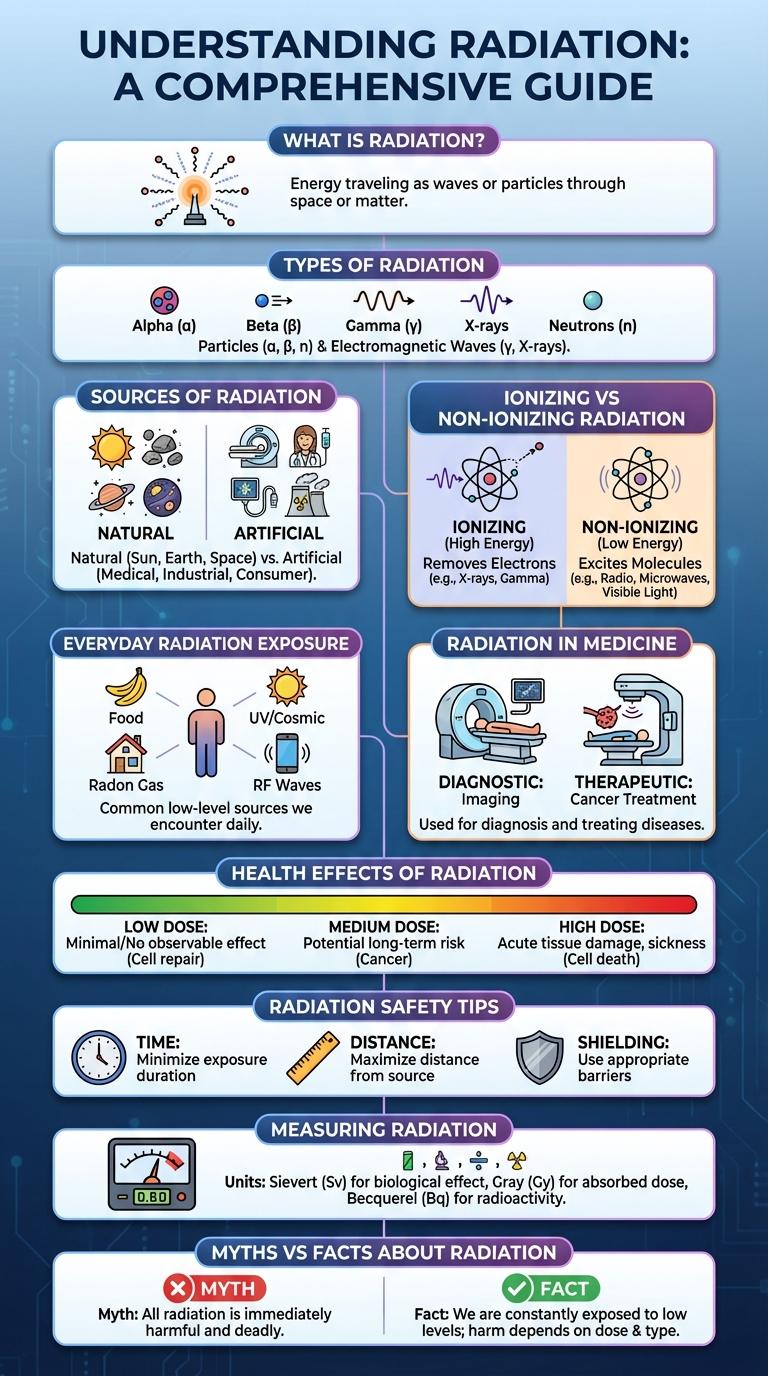
Radiation is energy that travels through space or matter in the form of waves or particles. It plays a crucial role in various fields, including medicine, energy production, and environmental science. Understanding the different types and effects of radiation helps promote safety and innovation across multiple industries.
What is Radiation?
Radiation is energy that travels through space or a medium in the form of waves or particles. It originates from natural sources like the sun and radioactive materials, as well as human-made sources such as X-rays and nuclear reactors.
There are two main types of radiation: ionizing and non-ionizing. Ionizing radiation carries enough energy to remove tightly bound electrons from atoms, potentially causing damage to living tissue.
Types of Radiation
Radiation is energy that travels through space or a medium in the form of waves or particles. It can be classified into ionizing and non-ionizing radiation based on its energy levels.
Ionizing radiation has enough energy to remove tightly bound electrons from atoms, creating ions, and can cause damage to living tissue. Common types include alpha particles, beta particles, gamma rays, and X-rays. Non-ionizing radiation has less energy and includes ultraviolet light, visible light, infrared radiation, microwaves, and radio waves, which are generally less harmful.
Sources of Radiation
Radiation originates from both natural and artificial sources, impacting our daily lives. Natural sources include cosmic rays from space, radon gas from the earth, and radioactive materials in the soil. Artificial sources involve medical procedures, industrial applications, and nuclear power generation.
Ionizing vs Non-Ionizing Radiation
What are the key differences between ionizing and non-ionizing radiation? Ionizing radiation carries enough energy to remove tightly bound electrons from atoms, causing ionization. Non-ionizing radiation has lower energy and cannot ionize atoms but can cause molecules to vibrate and generate heat.
How does ionizing radiation impact human health compared to non-ionizing radiation? Ionizing radiation can damage DNA and increase cancer risk due to its high energy levels. Non-ionizing radiation is generally safer but excessive exposure, like from UV rays, may cause skin damage or thermal injuries.
Everyday Radiation Exposure
Radiation is a natural part of our environment, present in various everyday sources. Understanding common radiation exposures helps in managing health risks effectively.
- Cosmic Radiation - Radiation from space reaches the Earth and contributes to background exposure.
- Radon Gas - A naturally occurring radioactive gas found in homes that can accumulate and increase exposure risks.
- Medical Imaging - X-rays and CT scans involve controlled radiation used for diagnostic purposes.
Most everyday radiation exposures are low and monitored to ensure safety standards are met.
Radiation in Medicine
Radiation in medicine plays a vital role in diagnosis and treatment, using controlled doses for imaging and therapy. Techniques such as X-rays, CT scans, and radiation therapy leverage ionizing radiation to target diseases accurately. Medical radiation improves patient outcomes by enabling early detection and effective cancer treatments.
Health Effects of Radiation
Radiation exposure can significantly impact human health, causing damage at the cellular and DNA levels. Prolonged or high doses increase the risk of cancer, radiation sickness, and genetic mutations.
Low doses of radiation may lead to subtle changes, including increased risk of cataracts and cardiovascular disease. Protective measures and monitoring are essential to minimize adverse health effects and ensure safety.
Radiation Safety Tips
| Radiation Safety Tip | Description |
|---|---|
| Limit Exposure Time | Reduce the time spent near radiation sources to minimize dose received. |
| Maintain Distance | Increase distance from radiation sources to decrease exposure intensity. |
| Use Shielding | Employ barriers like lead or concrete to block or reduce radiation levels. |
| Wear Protective Gear | Use personal protective equipment such as lead aprons and gloves when necessary. |
| Follow Safety Protocols | Adhere to established radiation safety guidelines and regulations to ensure protection. |
Measuring Radiation
Radiation measurement is essential for safety in environments with radioactive materials. Specialized instruments detect and quantify radiation levels to assess exposure risks.
- Geiger-Muller Counter - Detects ionizing radiation by counting electrical pulses generated by radioactive particles.
- Scintillation Detector - Uses a scintillating material to produce light when struck by radiation, which is then measured.
- Dosimeter - Measures cumulative radiation dose received by an individual over time for personal safety monitoring.