
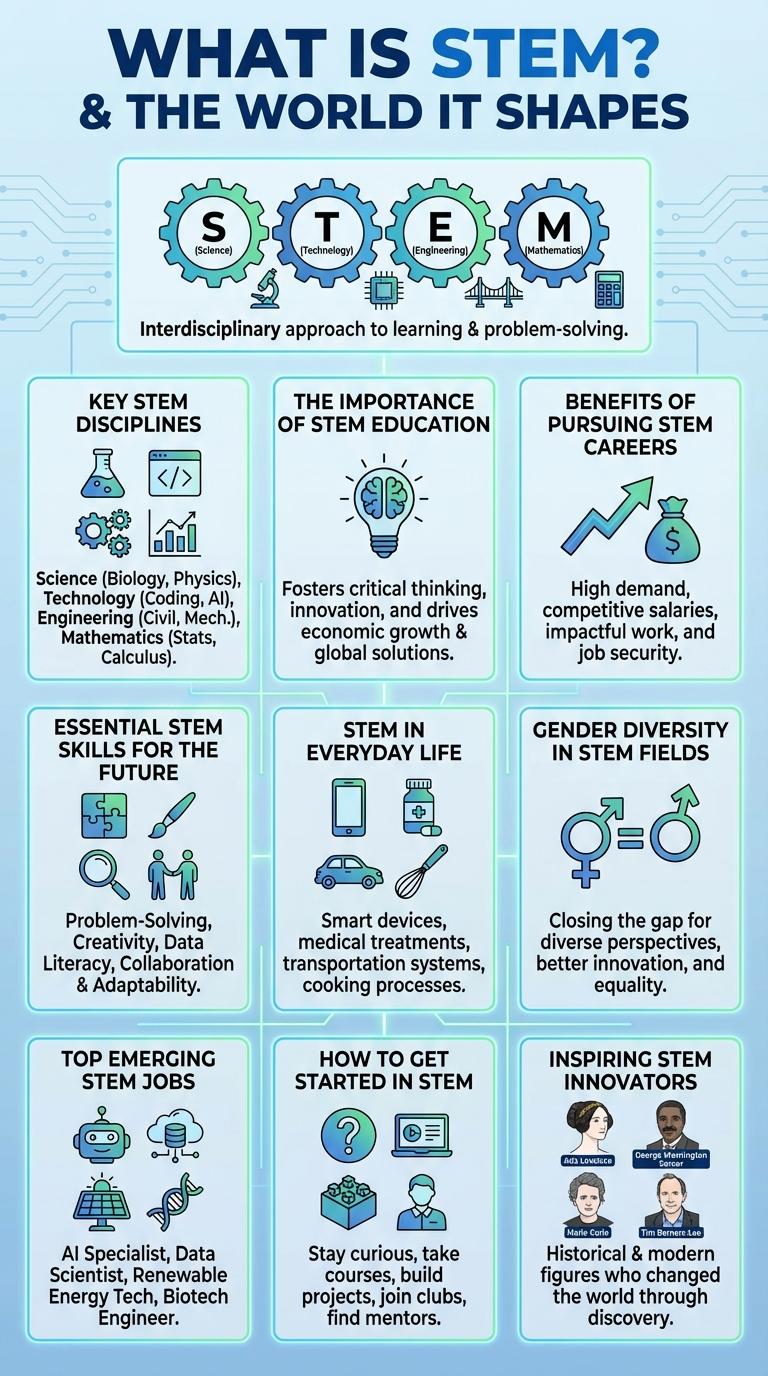
STEM education integrates science, technology, engineering, and mathematics to foster critical thinking, creativity, and problem-solving skills. The infographic highlights key statistics, benefits, and career opportunities within the STEM fields. Visual data provides clear insights into how STEM drives innovation and economic growth worldwide.
What is STEM?
STEM stands for Science, Technology, Engineering, and Mathematics, representing key fields driving innovation and economic growth. These disciplines emphasize critical thinking, problem-solving, and technical skills essential for the modern workforce.
- Science - The study of the natural world through observation and experimentation.
- Technology - The application of scientific knowledge for practical purposes and innovation.
- Engineering - The design and construction of systems, structures, and devices.
Key STEM Disciplines
STEM represents the integration of Science, Technology, Engineering, and Mathematics, driving innovation and problem-solving in the modern world. Each discipline contributes unique skills and knowledge crucial for advancements in fields like healthcare, robotics, and environmental science. Understanding key STEM disciplines empowers individuals to excel in technology-driven careers and fosters critical thinking and creativity.
| Discipline | Focus Area |
|---|---|
| Science | Exploration of natural phenomena and development of theories |
| Technology | Application of tools and software to solve practical problems |
| Engineering | Designing and building infrastructure, machines, and systems |
| Mathematics | Quantitative analysis and problem-solving using numbers |
The Importance of STEM Education
Why is STEM education crucial for future success? STEM education fosters critical thinking, creativity, and problem-solving skills essential in today's technology-driven world. It equips students with the knowledge needed to excel in high-demand careers across science, technology, engineering, and mathematics.
How does STEM education impact the economy? STEM fields contribute significantly to economic growth by driving innovation and maintaining global competitiveness. Investing in STEM talent supports the development of cutting-edge technologies and a skilled workforce.
What role does STEM education play in closing skill gaps? STEM programs help bridge the gap between industry needs and workforce skills, reducing unemployment and underemployment rates. Providing hands-on, interdisciplinary learning prepares students for real-world challenges in rapidly evolving fields.
Why is early STEM education vital? Early exposure to STEM concepts builds a strong foundation for lifelong learning and interest in related careers. Encouraging young learners, especially underrepresented groups, promotes diversity and inclusion in STEM professions.
How can STEM education shape societal advancement? STEM drives solutions for critical global issues such as climate change, healthcare, and infrastructure. Educating future innovators empowers communities to create sustainable and impactful technological advancements.
Benefits of Pursuing STEM Careers
STEM careers offer high earning potential and job security across various industries, including technology, engineering, and healthcare. These fields drive innovation and address critical global challenges, making them both impactful and rewarding. Pursuing STEM careers fosters continuous learning and skill development, ensuring long-term professional growth.
Essential STEM Skills for the Future
| Essential STEM Skills | Description |
|---|---|
| Critical Thinking | Analyzing complex problems and evaluating solutions using logical reasoning. |
| Data Literacy | Interpreting, managing, and utilizing data effectively for informed decision-making. |
| Coding and Programming | Creating algorithms and writing code to develop software and applications. |
| Collaboration | Working effectively in diverse teams to innovate and solve interdisciplinary challenges. |
| Adaptability | Adjusting skills and approaches quickly in response to evolving technologies and environments. |
STEM in Everyday Life
STEM (Science, Technology, Engineering, and Mathematics) shapes many aspects of daily life. Understanding STEM helps solve real-world problems efficiently.
From the smartphones we use to the transportation systems we rely on, STEM innovations are everywhere. Medical advances improve healthcare through technology and engineering. Everyday appliances like microwaves and washing machines also depend on STEM principles.
Gender Diversity in STEM Fields
Gender diversity in STEM fields remains a critical focus for educational institutions and employers worldwide. Women represent approximately 28% of the workforce in science, technology, engineering, and mathematics professions.
Efforts to increase female participation include scholarships, mentorship programs, and inclusive workplace policies. Closing the gender gap can drive innovation and improve problem-solving across STEM industries.
Top Emerging STEM Jobs
STEM fields are rapidly evolving, driving demand for specialized skills in emerging job roles. The integration of technology and science is creating new opportunities across industries.
- Data Scientist - Analyzes complex data to help organizations make informed decisions using advanced algorithms and statistical techniques.
- Artificial Intelligence Engineer - Designs and develops AI models to automate processes and improve decision-making capabilities.
- Renewable Energy Technician - Installs and maintains sustainable energy systems like solar panels and wind turbines.
Focusing on these top emerging STEM jobs can boost career growth and align with future market demands.
How to Get Started in STEM
Entering the STEM field can open doors to innovative careers and lifelong learning opportunities. Understanding the fundamentals and taking strategic steps are essential for a successful start in STEM.
Getting started in STEM involves building a strong foundation and gaining practical experience.
- Explore STEM subjects early - Engage with math, science, technology, and engineering courses to develop core knowledge.
- Participate in hands-on activities - Join science clubs, coding workshops, or robotics teams to apply skills in real-world scenarios.
- Seek mentorship and resources - Connect with professionals and use online platforms to enhance learning and build networks.