
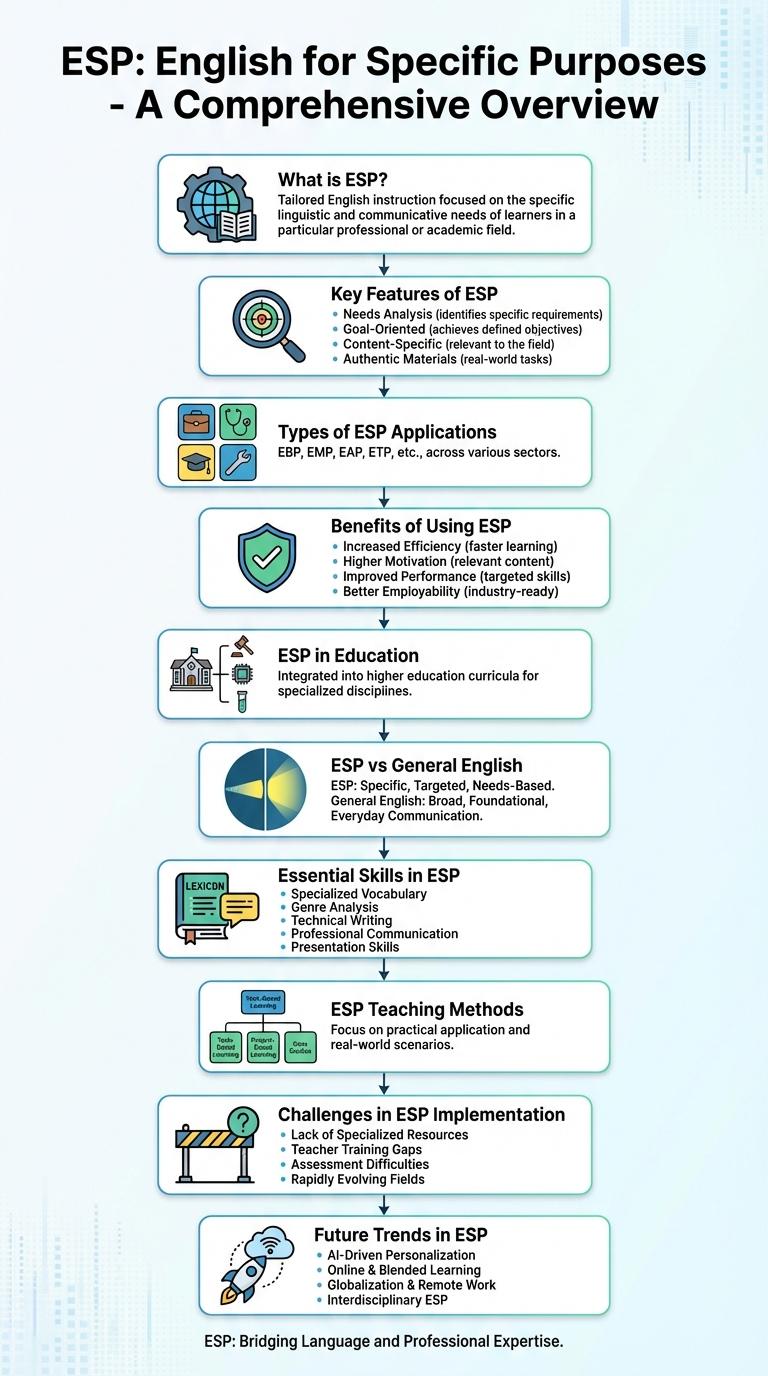
An infographic about ESP visually presents key information on extrasensory perception, highlighting its types such as telepathy, clairvoyance, and precognition. It breaks down scientific studies, historical context, and popular beliefs surrounding ESP. This format helps simplify complex concepts for better understanding and engagement.
What is ESP?
ESP, or Extra-Sensory Perception, refers to the ability to acquire information beyond the known human senses. It encompasses phenomena like telepathy, clairvoyance, and precognition.
ESP is often studied in parapsychology to understand how individuals might access knowledge without traditional sensory input.
- Telepathy - The direct transmission of thoughts or feelings between individuals without using the usual sensory channels.
- Clairvoyance - The ability to gain information about an object, person, or event through means other than the known senses.
- Precognition - The purported ability to perceive or predict future events before they happen.
Key Features of ESP
English for Specific Purposes (ESP) tailors language learning to meet the specialized needs of learners in professional, academic, or technical fields. Key features of ESP include a focus on specific vocabulary, practical communication skills, and contextual learning relevant to a particular domain. This approach enhances learner motivation and improves efficiency by concentrating on relevant language use.
Types of ESP Applications
English for Specific Purposes (ESP) targets language skills tailored to particular fields or professions. It enhances communication by focusing on relevant vocabulary, contexts, and skills.
Types of ESP applications include English for Academic Purposes (EAP), which assists students in mastering language for academic settings. English for Occupational Purposes (EOP) focuses on workplace communication within industries like healthcare, engineering, or business. English for Professional Purposes (EPP) supports professionals aiming to improve language for career advancement and specialized tasks.
Benefits of Using ESP
Email Service Providers (ESPs) streamline the process of creating, sending, and tracking email campaigns with ease. They offer advanced segmentation, automation, and analytics tools that enhance targeting and improve engagement rates. ESPs also ensure higher deliverability and compliance with email regulations, boosting overall marketing effectiveness.
ESP in Education
English for Specific Purposes (ESP) tailors language learning to meet the needs of specific fields or professions. ESP in education focuses on equipping students and professionals with language skills relevant to teaching, administration, and academic research.
ESP courses in education emphasize technical vocabulary, communication skills, and academic writing. These specialized programs improve effectiveness in educational settings and enhance career opportunities for educators and researchers.
ESP vs General English
English for Specific Purposes (ESP) is tailored to meet the unique language needs of specific professions, industries, or academic disciplines. It emphasizes practical vocabulary, expressions, and skills relevant to particular contexts such as business, aviation, medical fields, or law.
General English focuses on broad language skills applicable in everyday communication and social settings. It covers a wide range of topics and basic grammar, aiming to improve overall fluency and comprehension rather than specialized terminology.
Essential Skills in ESP
English for Specific Purposes (ESP) targets language skills tailored to specific professional fields. Mastering essential skills in ESP enhances effective communication within specialized contexts.
ESP focuses on technical vocabulary, context relevance, and practical language use.
- Technical Vocabulary Acquisition - Learning industry-specific terms improves comprehension and communication accuracy.
- Contextual Language Use - Applying language skills within relevant professional settings boosts practical effectiveness.
- Communication Competence - Developing verbal and written skills enables clear exchange of information in specific domains.
ESP Teaching Methods
What are the most effective ESP teaching methods?
ESP (English for Specific Purposes) teaching methods focus on tailoring language instruction to specific professional or academic fields. These methods prioritize real-world applications and specialized vocabulary to enhance learner relevance and engagement.
| ESP Teaching Method | Key Features |
|---|---|
| Needs Analysis | Identifies learner goals, vocabulary, and skills specific to their field. |
| Task-Based Learning | Focuses on completing real-life tasks related to learners' target professions. |
| Content-Based Instruction | Integrates subject matter content with language learning for specialized communication. |
| Authentic Materials | Uses real documents, reports, and media from specific industries to enhance exposure. |
| Collaborative Learning | Encourages teamwork on projects simulating workplace scenarios to build practical skills. |
Challenges in ESP Implementation
English for Specific Purposes (ESP) addresses the unique linguistic needs of learners in specialized fields. Implementing ESP programs presents distinct challenges that affect curriculum design and learner engagement.
- Limited Resource Availability - Specialized teaching materials and trained instructors are often scarce for niche disciplines.
- Varied Learner Backgrounds - ESP learners have diverse proficiency levels and professional experiences, complicating course customization.
- Integration with Professional Practices - Aligning language instruction with evolving industry standards requires continuous adaptation.
Overcoming these challenges is essential for effective ESP program success and learner competency in field-specific communication.