
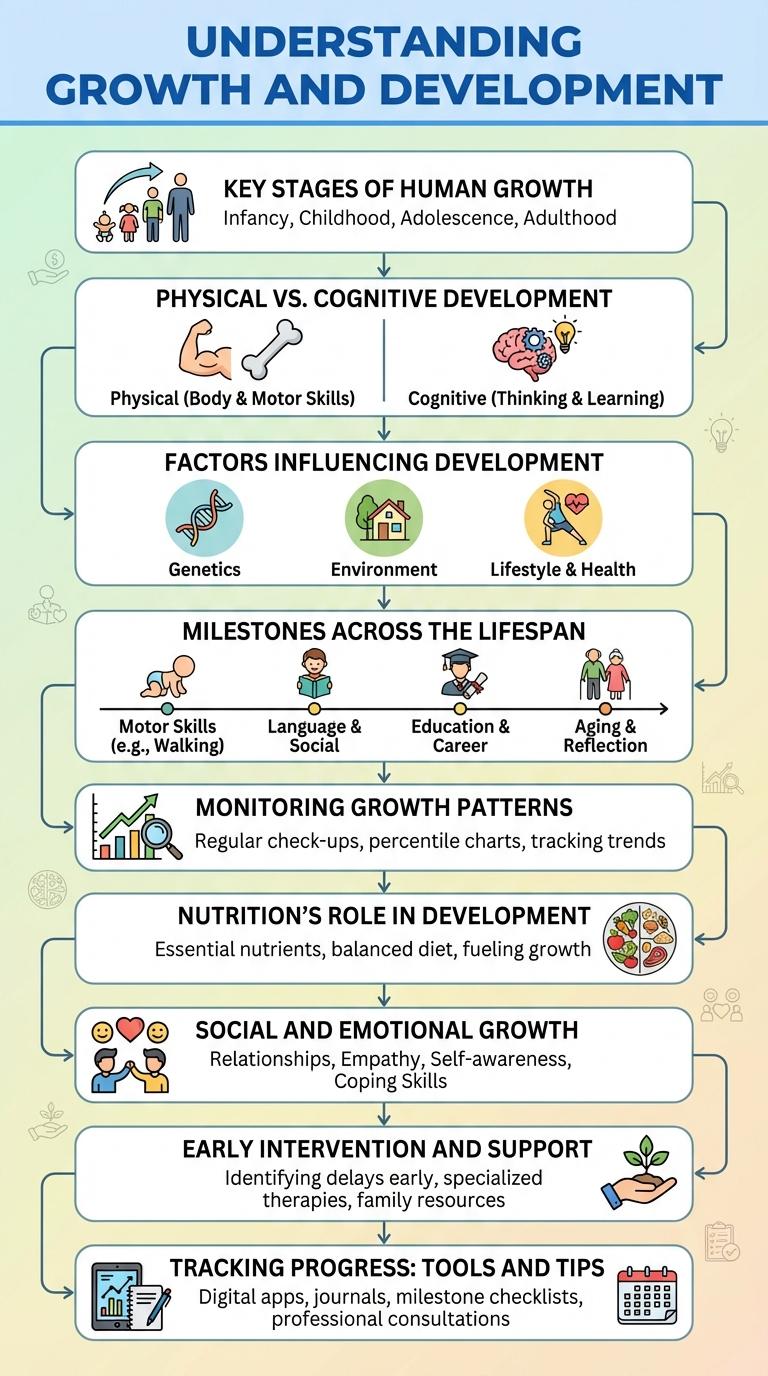
Infographics about growth and development visually represent key stages and factors influencing physical, cognitive, and emotional progress. They highlight milestones and trends from infancy through adulthood, making complex information accessible and engaging. These visuals aid in understanding patterns that shape human potential and well-being.
Understanding Growth and Development
Growth and development are fundamental processes that reflect physical, cognitive, and emotional changes over time. Understanding these processes helps in identifying normal progress and potential challenges in individuals.
Growth primarily refers to measurable physical changes such as height, weight, and organ development. Development encompasses the acquisition of skills, emotional maturity, and cognitive abilities. Monitoring both growth and development provides a comprehensive view of overall health and well-being.
Key Stages of Human Growth
| Stage | Characteristics |
|---|---|
| Infancy (0-2 years) | Rapid physical growth, sensory exploration, motor skills development |
| Early Childhood (2-6 years) | Language acquisition, basic social skills, cognitive development |
| Middle Childhood (6-12 years) | Improved reasoning, academic learning, peer relationships |
| Adolescence (12-18 years) | Puberty, identity formation, abstract thinking |
| Adulthood (18+ years) | Emotional maturity, career development, physical maintenance |
Physical vs. Cognitive Development
Growth and development encompass both physical and cognitive changes that occur throughout life. Physical development includes changes in body size, muscle strength, and motor skills. Cognitive development involves improvements in thinking, problem-solving, and memory functions.
Factors Influencing Development
Growth and development in individuals are influenced by a combination of genetic and environmental factors. These factors interact to shape physical, cognitive, and emotional progress throughout life.
Nutrition, family environment, and social interactions play crucial roles in supporting healthy development. Access to education and healthcare further enhances growth potential and overall well-being.
Milestones Across the Lifespan
Growth and development encompass the physical, cognitive, and emotional changes occurring throughout a human lifespan. Milestones mark critical points in a person's progression from infancy to older adulthood.
Infants typically achieve motor skills like sitting and walking within the first year. Childhood and adolescence bring advances in language, social interaction, and abstract thinking.
Adulthood involves career development, maintaining relationships, and adapting to physical changes. Senior years often focus on cognitive health, emotional well-being, and life reflection.
Tracking these milestones helps identify typical development and detect early signs of delays. Understanding growth patterns supports caregivers, educators, and healthcare providers in fostering healthy development.
Monitoring Growth Patterns
Monitoring growth patterns involves tracking physical changes such as height, weight, and body mass index (BMI) over time to ensure proper development. Regular assessment helps identify deviations from typical growth trajectories, enabling early intervention for potential health issues. Accurate growth monitoring supports personalized healthcare and promotes optimal physical and cognitive development in individuals.
Nutrition's Role in Development
Nutrition plays a critical role in the growth and development of the human body by providing essential nutrients needed for cellular function and overall health. Proper nutrition supports physical growth, cognitive development, and immune system strength throughout all life stages.
- Macronutrients support energy and structure - Proteins, carbohydrates, and fats provide the energy and building blocks necessary for tissue growth and repair.
- Micronutrients ensure vital biochemical processes - Vitamins and minerals like iron, zinc, and vitamin A facilitate enzymatic reactions and cognitive function.
- Early nutrition impacts long-term development - Adequate nutrient intake during infancy and childhood influences brain development and reduces risk of chronic diseases.
Balanced nutrition is foundational for optimal physical and mental growth during critical developmental periods.
Social and Emotional Growth
Social and emotional growth is crucial for children as it shapes their ability to form relationships and manage emotions effectively. This development influences their confidence, empathy, and social skills throughout life.
- Emotional Regulation - Learning to understand and control emotions helps children respond appropriately in various situations.
- Social Interaction - Building relationships with peers fosters communication skills and cooperation.
- Empathy Development - Recognizing others' feelings promotes compassion and positive social behavior.
Early Intervention and Support
Early intervention and support play a critical role in a child's growth and development by addressing potential delays promptly. Providing timely support helps optimize developmental outcomes and enhances long-term well-being.
Effective early intervention includes structured therapies and family education aimed at fostering developmental milestones and social skills.
- Early Detection - Identifying developmental delays by age two leads to more successful intervention strategies.
- Customized Support - Tailored programs accommodate individual needs, promoting cognitive, motor, and emotional growth.
- Parental Involvement - Active family participation increases the effectiveness of therapeutic activities and strengthens child development.