
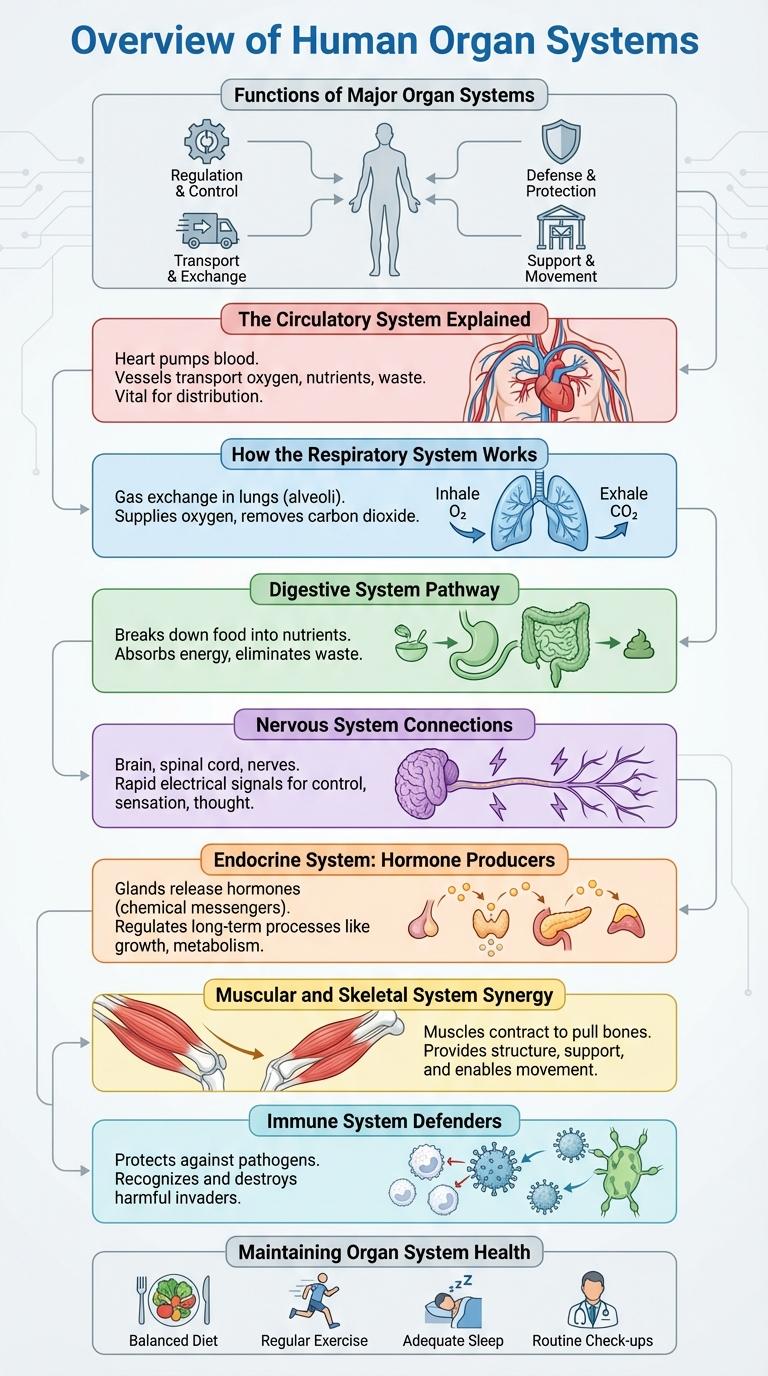
An infographic about the organ system visually highlights the complex interactions between organs that sustain life. It breaks down each system's function, such as the circulatory, respiratory, and digestive systems, providing clear and concise information. This format enhances understanding of how organs work together to maintain overall health.
Overview of Human Organ Systems
The human body consists of 11 major organ systems, each responsible for specific functions that maintain overall health and homeostasis. These systems include the circulatory, respiratory, digestive, nervous, muscular, skeletal, endocrine, urinary, reproductive, integumentary, and lymphatic systems. Together, they enable vital processes such as nutrient absorption, waste elimination, and defense against disease.
| Organ System | Primary Function |
|---|---|
| Circulatory | Transports blood, nutrients, and gases |
| Respiratory | Facilitates gas exchange for oxygen and carbon dioxide |
| Digestive | Breaks down food and absorbs nutrients |
| Nervous | Controls body functions and processes sensory information |
| Muscular | Enables movement and maintains posture |
Functions of Major Organ Systems
Organ systems coordinate complex functions essential for human survival and health. Each system performs specific roles that support the body's overall functionality.
- Circulatory System - Transports oxygen, nutrients, and hormones to cells and removes waste products.
- Respiratory System - Facilitates the exchange of oxygen and carbon dioxide between the body and the environment.
- Nervous System - Controls and coordinates body activities through electrical signals and responses.
- Digestive System - Breaks down food into nutrients for absorption and eliminates waste.
- Musculoskeletal System - Provides structure, support, and enables movement through bones and muscles.
The Circulatory System Explained
The circulatory system is responsible for transporting blood, nutrients, oxygen, and waste products throughout the body. It includes the heart, blood vessels, and blood, working together to maintain homeostasis.
- Heart Function - The heart pumps oxygenated blood to tissues and returns deoxygenated blood to the lungs for oxygenation.
- Blood Vessels - Arteries carry blood away from the heart, veins return blood, and capillaries enable nutrient and gas exchange.
- Blood Components - Blood consists of red blood cells, white blood cells, platelets, and plasma, each playing a vital role in circulation and immunity.
How the Respiratory System Works
How does the respiratory system enable breathing?
The respiratory system facilitates breathing by moving air into and out of the lungs, where oxygen is exchanged for carbon dioxide. This process allows oxygen to enter the bloodstream and carbon dioxide to be expelled from the body.
Digestive System Pathway
The digestive system is responsible for breaking down food into nutrients the body can absorb. It follows a specific pathway through various organs to achieve digestion and nutrient absorption.
- Mouth - Begins digestion by mechanically breaking down food and mixing it with saliva containing enzymes.
- Esophagus - Transports chewed food from the mouth to the stomach through peristaltic movements.
- Stomach - Secretes acid and enzymes to further break down food into a semi-liquid form called chyme.
- Small Intestine - Primary site for nutrient absorption, utilizing enzymes from the pancreas and bile from the liver.
- Large Intestine - Absorbs water and minerals, forming solid waste to be expelled from the body.
This pathway ensures efficient digestion and nutrient absorption essential for overall health.
Nervous System Connections
| Component | Function |
|---|---|
| Brain | Processes sensory information and controls bodily functions |
| Spinal Cord | Transmits signals between the brain and the rest of the body |
| Peripheral Nerves | Connects the central nervous system to limbs and organs |
| Neurons | Transmit electrical impulses across synapses |
| Sensory Receptors | Detect stimuli such as touch, temperature, and pain |
Endocrine System: Hormone Producers
The endocrine system consists of glands that produce and secrete hormones directly into the bloodstream. These hormones regulate various bodily functions including growth, metabolism, and reproduction.
Major hormone-producing glands include the pituitary, thyroid, adrenal glands, pancreas, and ovaries or testes. The pituitary gland, often called the "master gland," controls other endocrine glands. Hormones from these glands coordinate critical processes to maintain homeostasis and overall health.
Muscular and Skeletal System Synergy
The muscular and skeletal systems work together to enable movement and provide structural support. Muscles attach to bones via tendons, allowing contraction to move the skeleton. This synergy ensures stability, posture, and coordinated physical activity essential for daily functions.
Immune System Defenders
The immune system defenders protect the body against harmful pathogens like bacteria, viruses, and fungi. Key components include white blood cells, antibodies, and the lymphatic system.
White blood cells such as macrophages and lymphocytes identify and destroy invaders. Antibodies neutralize harmful agents, while the lymphatic system transports immune cells throughout the body.