
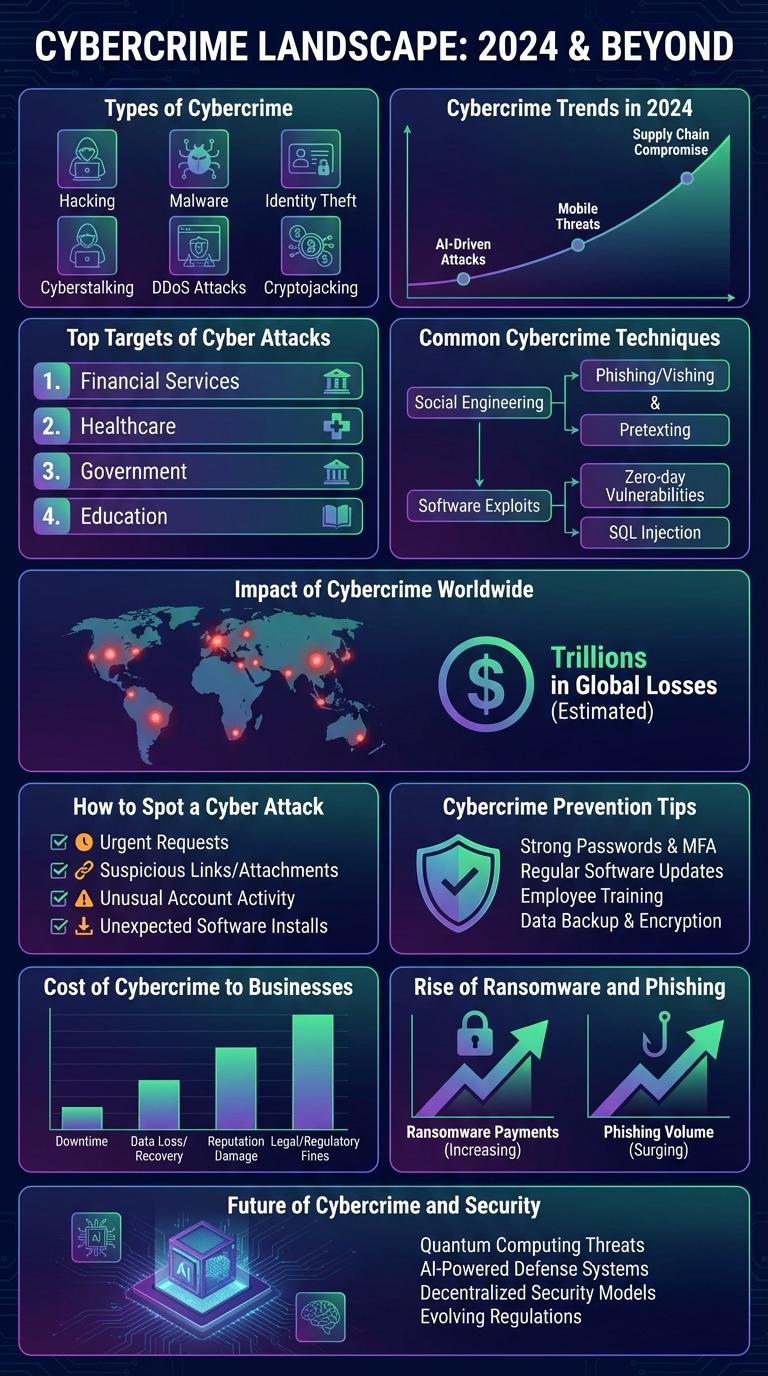
Cybercrime targets individuals and organizations by exploiting digital vulnerabilities, causing significant financial and data losses worldwide. Infographics visually highlight the most common cyber threats, such as phishing, ransomware, and identity theft, offering clear insights into their impact. Understanding these cybercrime patterns empowers users to implement stronger security measures and safeguard sensitive information.
Types of Cybercrime
What are the primary types of cybercrime affecting individuals and organizations today?
Cybercrime encompasses various illegal activities conducted through digital means. Understanding the main types helps in identifying and preventing these threats effectively.
| Type of Cybercrime | Description |
|---|---|
| Phishing | Fraudulent attempts to obtain sensitive information by mimicking trustworthy entities. |
| Malware Attacks | Malicious software designed to damage, disrupt, or gain unauthorized access to systems. |
| Ransomware | Malware that encrypts data, demanding payment for restoration of access. |
| Identity Theft | Unauthorized use of personal information for fraudulent purposes. |
| Denial of Service (DoS) | Overwhelming a system or network to disrupt normal traffic and operations. |
Cybercrime Trends in 2024
Cybercrime trends in 2024 reveal a significant increase in ransomware attacks, targeting both large corporations and small businesses. Phishing schemes continue to evolve, using AI-generated content to deceive users more effectively.
Data breaches have surged by 35%, affecting millions of users worldwide. Cloud service vulnerabilities remain a prime target, with cybercriminals exploiting weak configurations to access sensitive information.
Top Targets of Cyber Attacks
Cybercrime predominantly targets key sectors such as financial institutions, healthcare providers, and government agencies. Attackers exploit vulnerabilities in these critical areas to gain access to sensitive data and disrupt essential services. Businesses in retail and education sectors also face frequent cyber threats due to valuable personal and financial information stored on their networks.
Common Cybercrime Techniques
Cybercrime involves various techniques that exploit digital systems to steal data, disrupt services, or commit fraud. Understanding common cybercrime methods is essential for effective cybersecurity defense.
- Phishing - Attackers use deceptive emails or websites to trick individuals into revealing personal information.
- Ransomware - Malicious software encrypts files, demanding payment for data restoration.
- Malware - Malicious programs infiltrate systems to damage, steal data, or gain unauthorized access.
Impact of Cybercrime Worldwide
Cybercrime causes global financial losses exceeding $6 trillion annually, affecting businesses, governments, and individuals. The rise of ransomware attacks has led to significant disruptions in critical infrastructure and essential services worldwide. Increasing cyber threats undermine trust in digital systems, highlighting the urgent need for robust cybersecurity measures across all sectors.
How to Spot a Cyber Attack
Cyber attacks often begin with suspicious emails or unexpected messages asking for personal information. Recognizing these early signs can prevent data breaches and financial loss.
Unusual activity such as multiple login attempts or slow device performance may indicate a cyber attack is underway. Staying alert to these warning signals helps protect your sensitive information.
Cybercrime Prevention Tips
Cybercrime continues to evolve, posing significant threats to individuals and organizations worldwide. Implementing effective prevention strategies can reduce the risk and impact of cyber attacks.
- Use Strong Passwords - Create complex passwords combining letters, numbers, and symbols to enhance account security.
- Enable Two-Factor Authentication - Add an extra layer of verification for accessing sensitive accounts and data.
- Keep Software Updated - Regularly install updates to fix vulnerabilities and protect against new cyber threats.
Cost of Cybercrime to Businesses
| Aspect | Estimated Cost |
|---|---|
| Global Annual Losses | $6 trillion (2023 forecast) |
| Average Cost Per Business Attack | $1.72 million |
| Cost Increase Since 2018 | 15% rise |
| Ransomware Average Payout | $570,000 |
| Small Business Impact | 60% of small companies close within six months after attack |
Rise of Ransomware and Phishing
Cybercrime is rapidly evolving, with ransomware and phishing attacks becoming increasingly prevalent. These threats target individuals and organizations worldwide, causing significant financial and data losses.
Ransomware attacks encrypt critical data until a ransom is paid, often crippling business operations. Phishing scams deceive users into revealing sensitive information through fraudulent emails and websites. Both methods exploit human error and technological vulnerabilities to maximize impact.