
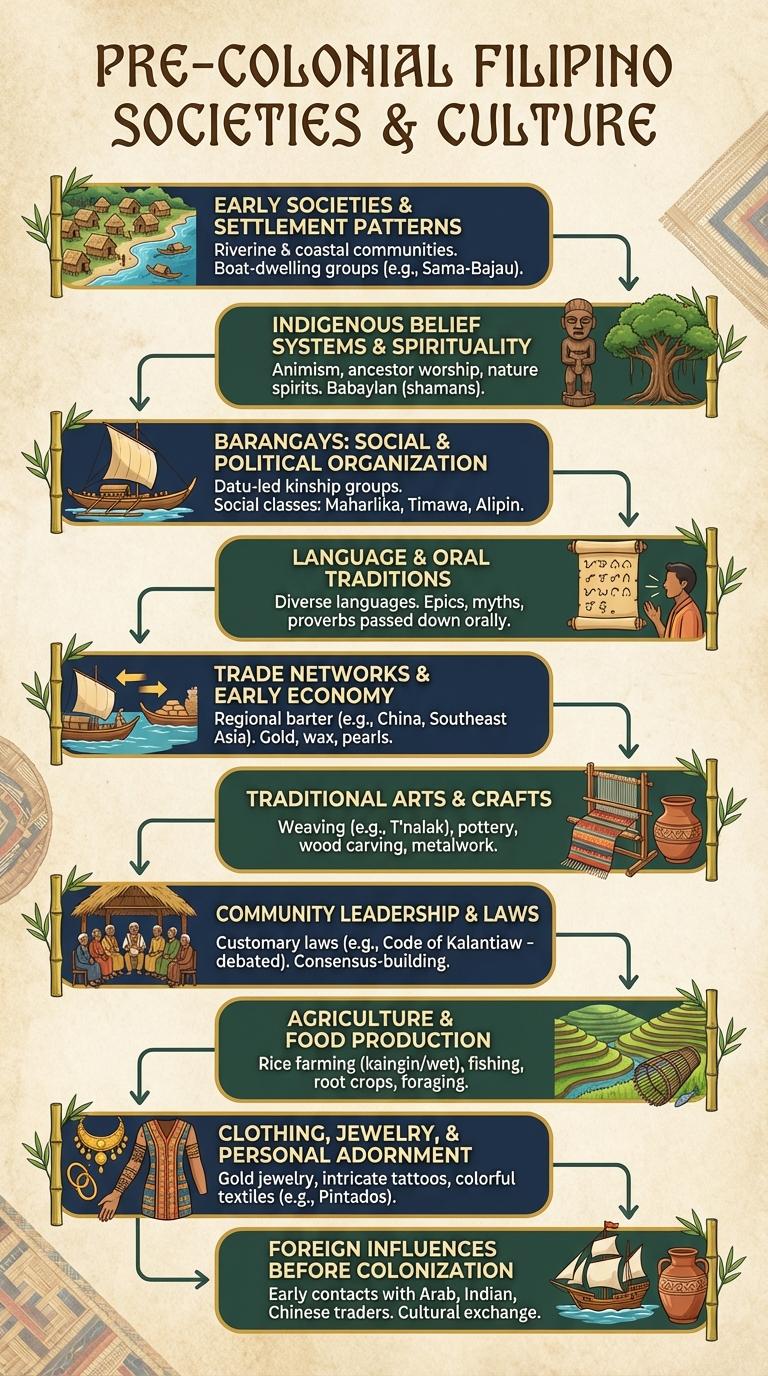
The pre-colonial period highlights diverse cultures, rich traditions, and established societies before foreign influence. Indigenous communities thrived with unique governance systems, trade networks, and artistic expressions. This era showcases the foundation of historical identity and cultural heritage.
Early Societies and Settlement Patterns
The pre-colonial period featured diverse early societies characterized by complex social structures and cultural practices. Communities established settlements based on environmental resources, trade routes, and defensive needs.
Settlement patterns included river valleys, coastal areas, and fertile plains, supporting agriculture and trade. These societies developed intricate networks that influenced political and economic organization before colonial influence.
Indigenous Belief Systems and Spirituality
The pre-colonial period was marked by diverse indigenous belief systems that deeply connected communities with nature and ancestral spirits. Spiritual practices often involved rituals, ceremonies, and oral traditions that preserved cultural heritage and fostered social cohesion. These belief systems emphasized harmony with the environment and the interdependence between humans, animals, and the spirit world.
Barangays: Social and Political Organization
| Aspect | Details |
|---|---|
| Barangay Definition | Small kinship-based communities led by a datu or chieftain, forming the basic social and political unit before colonization. |
| Leadership | Datu acted as the chief, responsible for governance, justice, and protection of the barangay members. |
| Social Classes | Hierarchy included the datu (ruler), maharlika (nobles/warriors), timawa (freemen), and alipin (dependents or slaves). |
| Political Functions | Barangays managed local governance, defense, trade regulation, and dispute resolution through the datu and council of elders. |
| Social Organization | Kinship ties and alliances strengthened social structure; mutual cooperation was essential for community welfare and survival. |
Language and Oral Traditions
The pre-colonial period featured diverse languages that evolved organically within indigenous communities, serving as vital tools for communication and cultural identity. Oral traditions played a crucial role in preserving history, customs, and knowledge through stories, songs, and rituals passed down generations. These languages and oral narratives established foundational societal structures and enriched the cultural heritage of numerous ethnic groups.
Trade Networks and Early Economy
The pre-colonial period featured extensive trade networks that connected diverse regions and cultures. These early economies thrived on the exchange of goods, fostering wealth and cultural interaction.
- Regional Trade Networks - Communities engaged in trade routes spanning forests, rivers, and seas, exchanging spices, metals, and textiles.
- Barter System - Goods and services were commonly exchanged without currency, relying on mutual agreement.
- Local Markets - Town centers served as hubs for economic activity, where farmers, artisans, and traders met regularly.
Trade networks and early economies established the foundation for social structures and cultural exchange in the pre-colonial era.
Traditional Arts and Crafts
The pre-colonial period was marked by rich traditions in arts and crafts that reflected indigenous cultures and lifestyles. These artistic expressions served both practical and ceremonial purposes within communities.
- Weaving and Textile Production - Indigenous communities created intricate fabrics using natural fibers, producing traditional clothing and blankets.
- Pottery and Ceramics - Skilled artisans shaped clay into functional and decorative vessels with distinctive regional styles.
- Wood Carving and Sculpture - Wood was carved into tools, masks, and ritual objects symbolizing cultural beliefs and ancestry.
Community Leadership and Laws
The pre-colonial period was characterized by strong community leadership rooted in kinship and consensus. Leaders, often elders or chiefs, held authority based on wisdom, bravery, and service to their people.
Communities governed themselves through customary laws passed down orally, emphasizing social harmony and restorative justice. Disputes were resolved collectively, with punishments aimed at reconciliation rather than retribution.
Agriculture and Food Production
The pre-colonial period marked the foundation of agriculture and food production in many societies. Communities developed diverse farming techniques suited to their environments.
Farmers cultivated staple crops such as maize, rice, and millet, ensuring food security for their populations. They practiced crop rotation and used natural fertilizers to maintain soil fertility. Hunting, fishing, and gathering complemented agricultural activities, providing dietary variety.
Clothing, Jewelry, and Personal Adornment
The pre-colonial period featured diverse cultural expressions through clothing, jewelry, and personal adornment. These elements symbolized social status, identity, and regional heritage.
- Clothing Materials - Natural fibers like cotton, bark cloth, and animal skins were commonly used for garments during the pre-colonial era.
- Jewelry Craftsmanship - Metalwork and bead designs reflected local traditions, using gold, brass, and shells for necklaces, bracelets, and earrings.
- Personal Adornment Practices - Body painting, tattoos, and scarification served as important markers of social roles and rites of passage.