
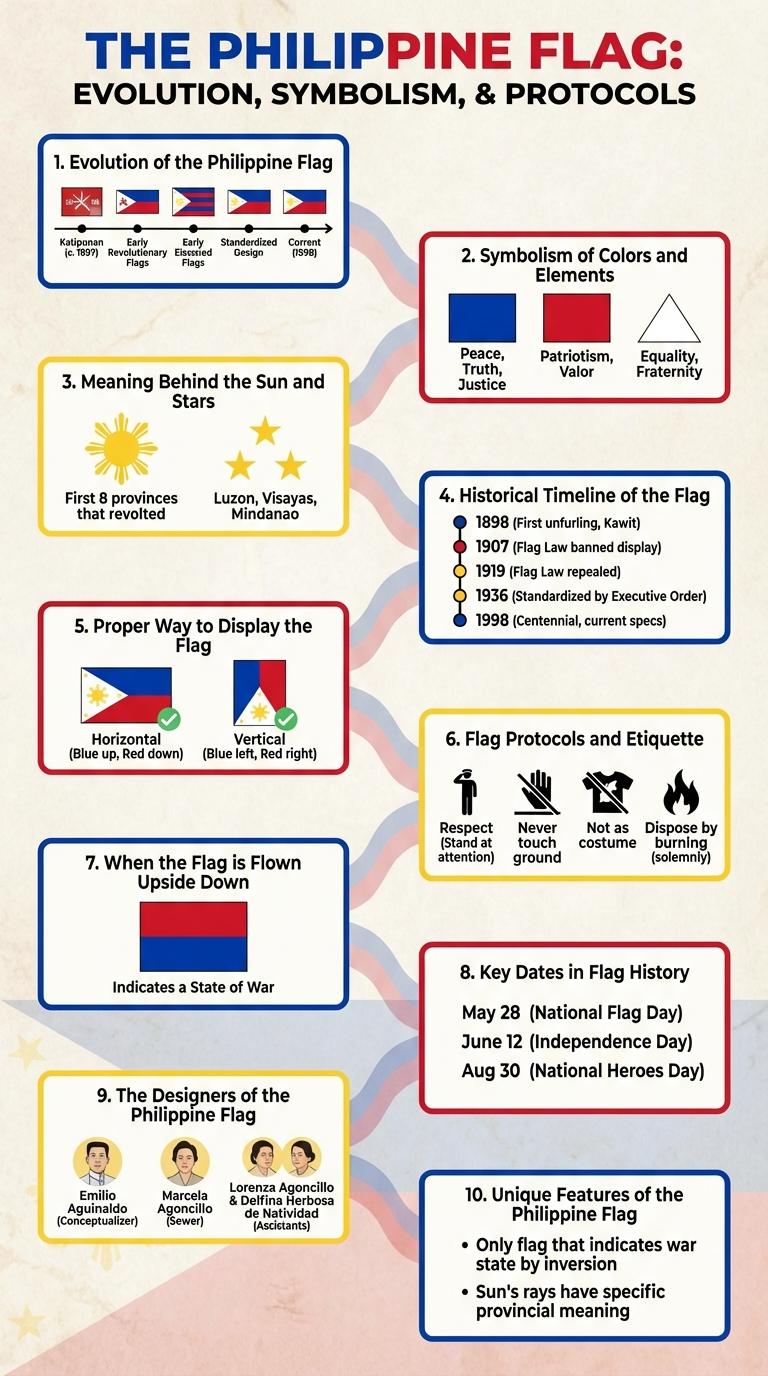
The Philippine flag features a unique design with bold colors and meaningful symbols that represent the nation's history and values. Its blue field signifies peace and justice, while the red stands for courage and patriotism. The white triangle holds a golden sun with eight rays, symbolizing freedom, and three stars representing the country's main island groups.
The Evolution of the Philippine Flag
The Philippine flag has undergone significant changes since its inception in 1898. It symbolizes the country's rich history and struggle for independence.
The original design was conceptualized by Emilio Aguinaldo during the Philippine Revolution. Key elements like the sun and three stars have remained, while minor adaptations reflected different political eras.
Symbolism of Colors and Elements
The Philippine flag is a powerful symbol of the country's history and values. Each color and element on the flag carries deep meanings related to patriotism and freedom.
- Blue Field - Represents peace, truth, and justice among Filipinos.
- Red Field - Symbolizes courage and the willingness to defend the nation.
- White Triangle - Denotes equality and fraternity among citizens.
- Three Stars - Represent the three main geographical regions: Luzon, Visayas, and Mindanao.
- Golden Sun - Embodies freedom, democracy, and sovereignty with its eight rays symbolizing the first eight provinces that revolted against Spanish rule.
Meaning Behind the Sun and Stars
What does the sun on the Philippine flag symbolize? The sun represents independence, freedom, and democracy. It reflects the bright future and hope of the Filipino people.
Why are there eight rays on the sun? Each ray stands for one of the first eight provinces that revolted against Spanish rule. These provinces are Manila, Cavite, Batangas, Bulacan, Pampanga, Nueva Ecija, Tarlac, and Laguna.
What is the meaning of the three stars on the flag? The three stars symbolize the three major geographical regions of the Philippines: Luzon, Visayas, and Mindanao. They emphasize unity among these diverse areas.
How does the sun and stars' design reflect Filipino identity? Together, they highlight the spirit of nationalism and the struggle for sovereignty. The symbols inspire pride and patriotism across the nation.
Historical Timeline of the Flag
The Philippine flag, officially unfurled on June 12, 1898, symbolizes independence from Spanish colonial rule. Designed by Emilio Aguinaldo, the flag features a white triangle, blue and red fields, and three golden stars with a sun, each element representing ideals and regions of the country. The flag's colors and symbols have evolved through historical milestones including the Philippine-American War, World War II, and the 1986 People Power Revolution.
Proper Way to Display the Flag
The Philippine flag holds deep national significance and must be displayed with proper respect. Correct handling and positioning of the flag ensure honor to the country's heritage and values.
- Daytime Display - The flag should be displayed from sunrise to sunset and must be illuminated if displayed at night.
- Flag Position - When displayed horizontally, the blue field should be on top in times of peace; the red field is on top during wartime.
- Half-Mast Protocol - The flag is flown at half-mast as a sign of mourning but must first be hoisted to the peak before lowering.
Proper display of the Philippine flag is a symbol of patriotism and national pride.
Flag Protocols and Etiquette
When the Flag is Flown Upside Down
The Philippine flag is a powerful symbol of national pride and identity. Displaying the flag upside down is a recognized distress signal indicating grave danger or emergency.
When flown upside down, the blue field is positioned at the bottom, and the red field appears on top. This signals that the nation is experiencing crisis or conflict and calls for immediate attention.
Key Dates in Flag History
The Philippine flag is a powerful symbol of the nation's identity and history. Its design and colors reflect the country's struggle for freedom and unity.
The flag was first unfurled on June 12, 1898, during the declaration of Philippine independence from Spain. On May 28, 1898, the flag was officially sewn in Hong Kong by Marcela Agoncillo and her helpers. The flag's design was approved by General Emilio Aguinaldo before its debut.
The Designers of the Philippine Flag
The Philippine flag was designed by Emilio Aguinaldo, who later became the first President of the Philippines. Marcela Agoncillo, assisted by her daughter Lorenza and fellow seamstress Delfina Herbosa de Natividad, meticulously stitched the flag by hand in 1898. This iconic symbol reflects the bravery, peace, and patriotism of the Filipino people during their struggle for independence.