
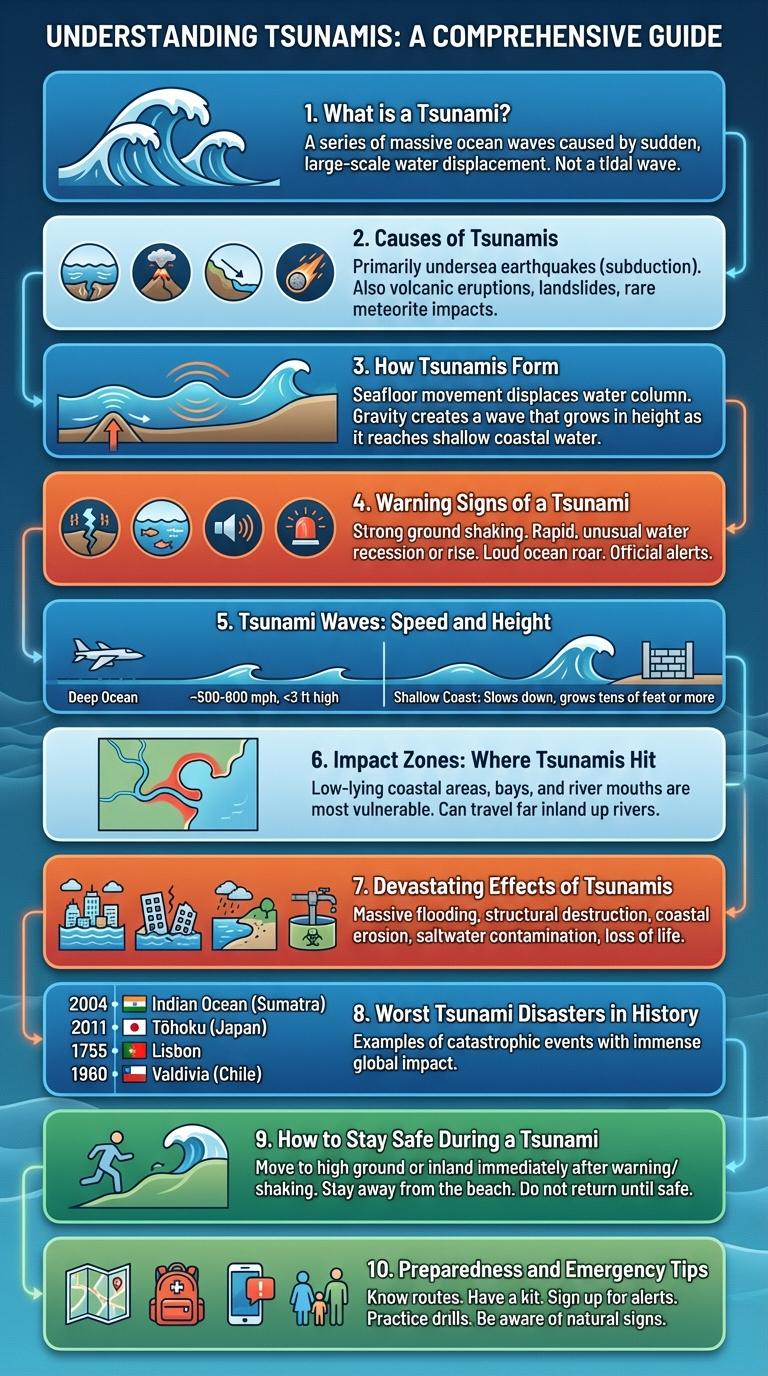
Tsunamis are powerful ocean waves caused by underwater earthquakes, volcanic eruptions, or landslides. These giant waves can travel at high speeds across the ocean, causing massive destruction upon reaching coastal areas. Understanding the causes, warning signs, and safety measures is crucial for tsunami preparedness and risk reduction.
What is a Tsunami?
A tsunami is a series of ocean waves caused by large underwater disturbances such as earthquakes, volcanic eruptions, or landslides. These waves can travel at speeds over 500 miles per hour and increase dramatically in height near coastlines. Tsunamis pose significant risks to coastal communities, leading to widespread flooding and destruction.
Causes of Tsunamis
| Cause | Description |
|---|---|
| Underwater Earthquakes | Shifts in tectonic plates beneath the ocean floor generate powerful seismic waves, displacing large water volumes and triggering tsunamis. |
| Volcanic Eruptions | Explosive underwater volcanic activity rapidly displaces water, creating waves that can develop into tsunamis. |
| Landslides | Massive underwater or coastal landslides push water outwards, initiating tsunami waves. |
| Meteorite Impacts | Large meteorite collisions with oceans cause sudden water displacement, leading to rare but massive tsunamis. |
| Glacier Calving | Rapid breaking off of icebergs into the ocean causes water displacement, sometimes resulting in localized tsunami waves. |
How Tsunamis Form
Tsunamis are powerful sea waves caused by sudden disturbances in the ocean. They can travel at high speeds across vast distances.
- Underwater Earthquakes - A sudden shift along tectonic plates displaces large volumes of water, triggering a tsunami.
- Volcanic Eruptions - Explosive volcanic activity can rapidly push water, forming tsunami waves.
- Submarine Landslides - Large underwater landslides cause water displacement that generates tsunami waves.
Tsunamis grow in height as they approach shallow coastal areas, causing significant damage upon impact.
Warning Signs of a Tsunami
Tsunamis are large ocean waves caused by underwater earthquakes, volcanic eruptions, or landslides. Recognizing warning signs can save lives by providing critical time to evacuate affected areas.
Warning signs of a tsunami include a rapid and unusual retreat of the ocean, exposing the sea floor and marine life. An earthquake felt near the coast can signal the potential for an approaching tsunami. A loud, roaring ocean sound similar to a train or jet engine may also indicate an imminent tsunami.
Tsunami Waves: Speed and Height
Tsunami waves can travel at speeds up to 500-800 kilometers per hour in deep ocean waters, comparable to commercial jetliners. As these waves approach shallow coastal areas, their speed decreases dramatically while their height can increase from less than a meter to over 30 meters, causing devastating impacts. The combination of extreme speed and towering wave height makes tsunamis one of the most dangerous natural disasters worldwide.
Impact Zones: Where Tsunamis Hit
Tsunamis impact coastal regions with the most severe damage occurring near the earthquake's epicenter. Understanding the zones where tsunamis strike helps in disaster preparedness and risk reduction.
These waves often travel across entire ocean basins, affecting distant shorelines with varying intensity.
- Nearshore Zone - The area closest to the quake origin, experiencing the strongest waves and most destruction.
- Intermediate Zone - Coastal regions farther from the epicenter, where wave energy decreases but flooding still occurs.
- Far-Field Zone - Distant coastlines hit by smaller waves, often thousands of kilometers away from the source.
Devastating Effects of Tsunamis
Tsunamis cause massive destruction along coastlines, leading to loss of life and property. The immense force of these waves disrupts ecosystems and infrastructure on a large scale.
- Loss of Human Life - Tsunami waves can lead to thousands of fatalities due to drowning and collapsing structures.
- Infrastructure Damage - Buildings, roads, and bridges are often swept away or severely damaged by powerful tsunami waves.
- Environmental Impact - Coastal ecosystems, including coral reefs and mangroves, suffer extensive damage from saltwater intrusion and physical destruction.
Worst Tsunami Disasters in History
Tsunamis are large ocean waves caused by underwater earthquakes, volcanic eruptions, or landslides. These powerful waves can cause catastrophic damage to coastal areas, resulting in significant loss of life and property.
Some of the worst tsunami disasters in history have caused tens of thousands of fatalities and extensive destruction. Understanding these events helps in improving early warning systems and disaster preparedness.
| Year & Location | Impact |
|---|---|
| 2004 Indian Ocean | Over 230,000 deaths, widespread destruction across 14 countries |
| 2011 Japan (Tohoku) | About 18,000 deaths, massive infrastructure damage, nuclear crisis |
| 1755 Lisbon, Portugal | Estimated 60,000 deaths, massive city destruction, cultural impact |
| 1883 Krakatoa, Indonesia | Over 36,000 deaths, volcanic eruption triggered waves up to 40 meters |
| 1946 Aleutian Islands, Alaska | Over 160 deaths, Pacific-wide tsunami impact including Hawaii |
How to Stay Safe During a Tsunami
A tsunami is a series of powerful ocean waves caused by underwater earthquakes or volcanic eruptions. These waves can travel at high speeds and cause widespread flooding and destruction along coastlines.
Recognizing natural tsunami warning signs is crucial for safety. These signs include a sudden withdrawal of the sea and an unusual roaring sound coming from the ocean.
Seek higher ground immediately if you notice any tsunami warning signs or receive an official alert. Avoid low-lying coastal areas and do not wait for official evacuation orders.
Stay informed by listening to emergency broadcasts on radio or mobile devices. Do not return to the shoreline until authorities confirm the tsunami danger has passed.