
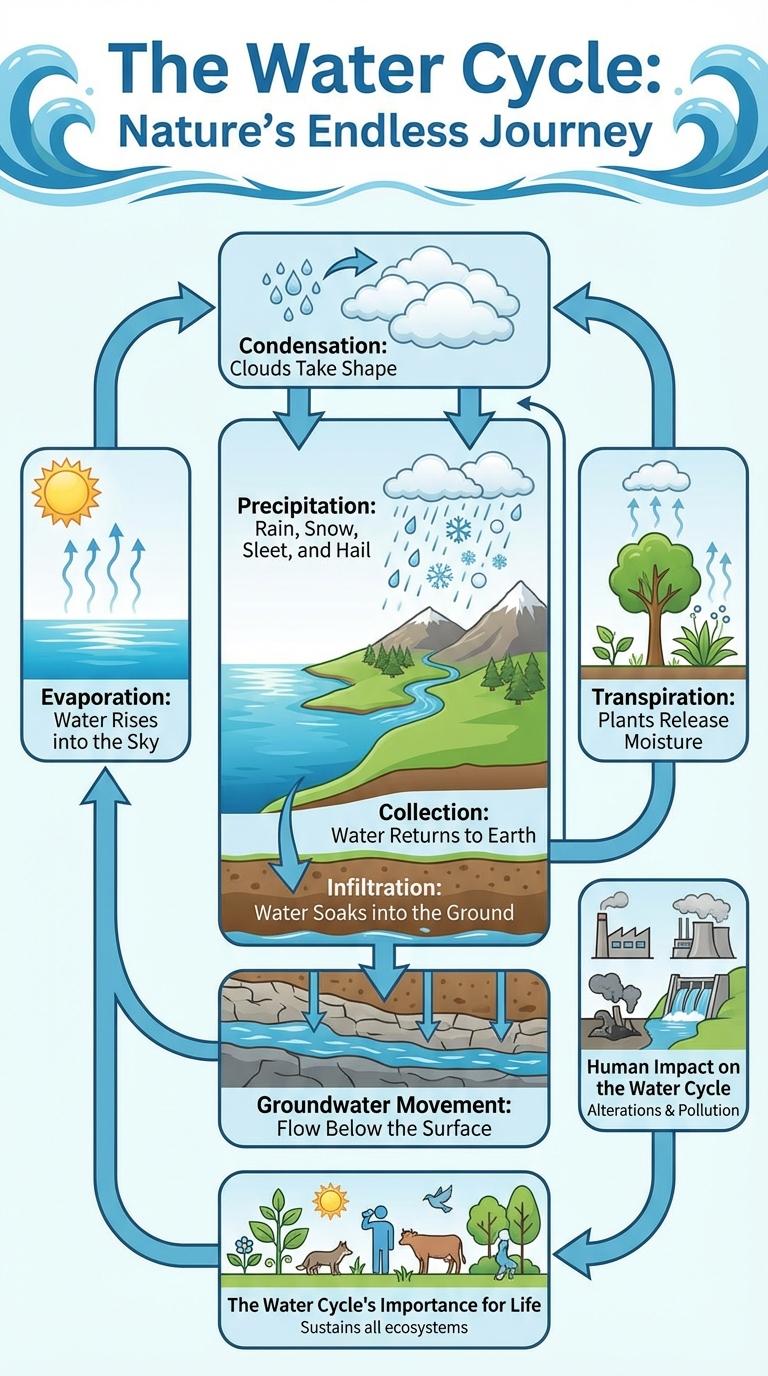
The water cycle illustrates the continuous movement of water through Earth's atmosphere, land, and oceans, highlighting processes such as evaporation, condensation, precipitation, and collection. This infographic visually breaks down each stage to explain how water transforms and moves within ecosystems. Understanding the water cycle is essential for grasping how natural water resources sustain life and influence weather patterns.
The Water Cycle: Nature's Endless Journey
| Stage | Description |
|---|---|
| Evaporation | Sun heats water bodies, turning liquid water into water vapor that rises into the atmosphere. |
| Condensation | Water vapor cools and transforms into tiny droplets, forming clouds in the sky. |
| Precipitation | Droplets in clouds combine and fall to the earth as rain, snow, sleet, or hail. |
| Collection | Precipitated water collects in rivers, lakes, and oceans, replenishing water sources. |
| Percolation | Water seeps into the ground to recharge groundwater supplies, supporting vegetation and ecosystems. |
Evaporation: Water Rises into the Sky
Evaporation is the process where water changes from liquid to vapor and rises into the atmosphere. This step is essential in the water cycle as it transfers water from the Earth's surface to the sky.
- Heat Energy - Solar radiation heats water bodies causing water molecules to become vapor and rise.
- Water Sources - Oceans, rivers, lakes, and soil contribute to evaporation by releasing water vapor.
- Atmospheric Impact - Water vapor accumulates in the air, leading to cloud formation and precipitation.
Condensation: Clouds Take Shape
Condensation is the process where water vapor cools and changes into liquid droplets, forming clouds. This transformation occurs when warm, moist air rises and encounters cooler temperatures in the atmosphere. The tiny droplets cluster together, creating visible clouds that play a key role in the water cycle.
Precipitation: Rain, Snow, Sleet, and Hail
The water cycle is a continuous process that circulates water throughout the Earth's atmosphere and surface. Precipitation is a key phase where water returns from the atmosphere to the ground in various forms.
- Rain - Liquid water droplets fall when clouds become saturated and droplets combine to a heavier size.
- Snow - Ice crystals form and accumulate when temperatures are below freezing, joining to create snowflakes.
- Sleet - Small ice pellets form when raindrops freeze before reaching the ground.
- Hail - Layers of ice balls develop in thunderstorms as strong updrafts repeatedly lift and freeze water droplets.
Precipitation replenishes freshwater sources and supports ecosystems worldwide.
Collection: Water Returns to Earth
The water cycle is a continuous process where water moves through the environment in different states. Collection is the stage where water returns to Earth's surface after precipitation.
During collection, water gathers in bodies such as rivers, lakes, oceans, and underground reservoirs known as aquifers. This collected water serves as a source for evaporation and transpiration, continuing the cycle. Collection ensures the replenishment of freshwater ecosystems and supports all terrestrial life forms.
Infiltration: Water Soaks into the Ground
The water cycle is a continuous process that moves water through the environment. Infiltration is a key phase where water soaks into the soil and replenishes groundwater.
- Infiltration Process - Water penetrates the soil surface and filters down through soil layers.
- Groundwater Recharge - Infiltration contributes to the replenishment of underground aquifers and water tables.
- Soil Moisture - The absorbed water supports plant roots and maintains soil health.
Groundwater Movement: Flow Below the Surface
The water cycle involves continuous movement of water above and below the Earth's surface. Groundwater movement occurs as water infiltrates soil, filling underground aquifers and flowing slowly through permeable rock layers. This subsurface flow supplies wells and springs, maintaining ecosystems and freshwater resources.
Transpiration: Plants Release Moisture
Transpiration is the process by which plants release moisture into the atmosphere. This occurs when water absorbed by roots travels through the plant and evaporates from leaf surfaces.
Transpiration contributes significantly to the water cycle by adding water vapor to the air, influencing humidity and cloud formation. It plays a crucial role in maintaining ecosystem hydration and regulating temperature.
Human Impact on the Water Cycle
The water cycle continuously moves water through evaporation, condensation, precipitation, and collection. Human activities significantly influence this natural process, altering water availability and quality.
Urbanization increases surface runoff, reducing groundwater recharge and increasing flood risks. Pollution from industrial, agricultural, and residential sources contaminates water bodies, disrupting ecosystems and water cycles globally.