
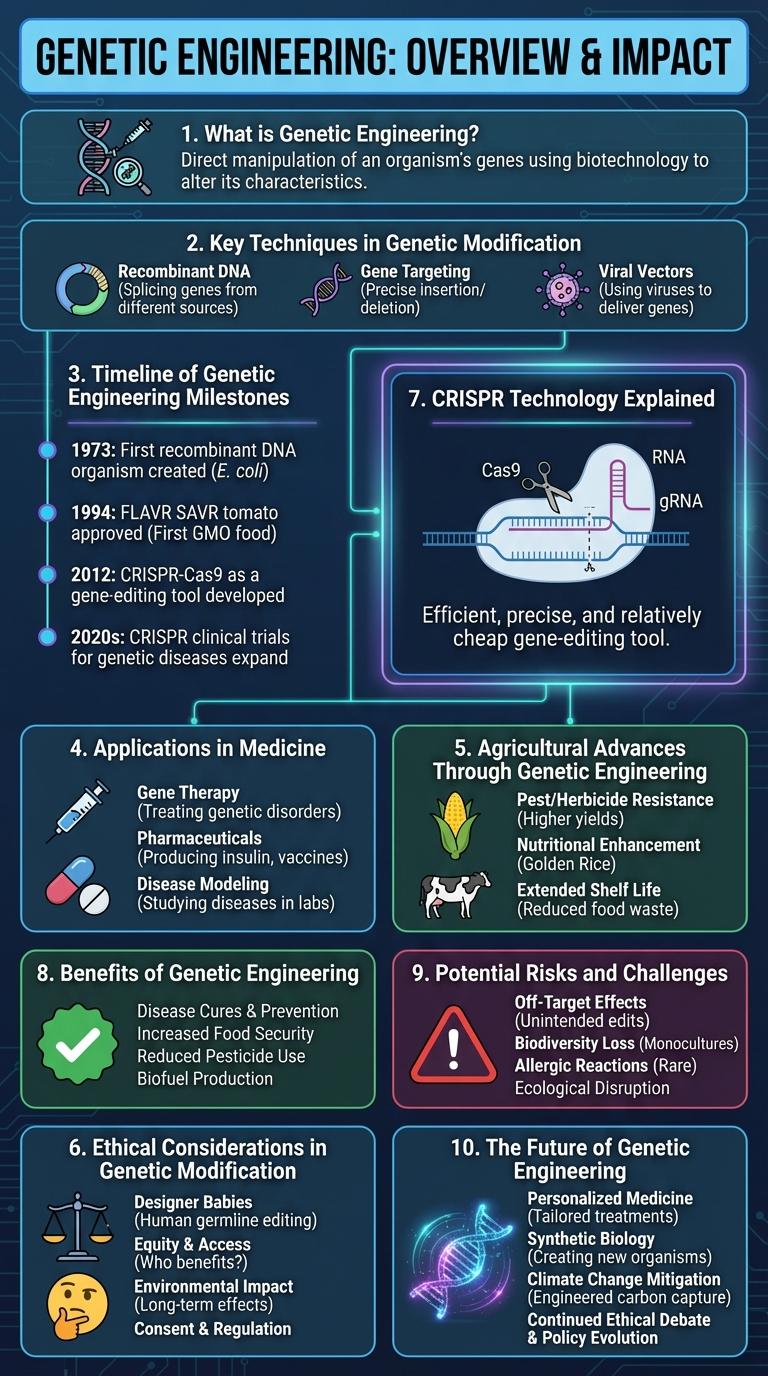
Genetic engineering revolutionizes the way scientists modify organisms by directly altering their DNA sequences to achieve desired traits. This infographic breaks down complex genetic modification techniques, applications, and ethical considerations into clear, digestible visuals. Understanding these elements highlights the profound impact genetic engineering has on medicine, agriculture, and biotechnology.
What is Genetic Engineering?
Genetic engineering involves the direct manipulation of an organism's DNA to alter its characteristics. This technology enables scientists to modify genes for specific traits or functions.
- Definition - Genetic engineering is the process of modifying an organism's genome using biotechnology techniques.
- Techniques - Methods include CRISPR, gene cloning, and recombinant DNA technology to edit or insert genes.
- Applications - Used in medicine, agriculture, and industry to create genetically modified organisms with desired traits.
Key Techniques in Genetic Modification
What are the key techniques used in genetic engineering? Genetic engineering primarily involves methods like CRISPR-Cas9, recombinant DNA technology, and gene silencing. These techniques enable precise modifications in an organism's DNA to achieve desired traits.
Timeline of Genetic Engineering Milestones
| Year | Milestone |
|---|---|
| 1973 | First recombinant DNA molecule created by Herbert Boyer and Stanley Cohen |
| 1982 | FDA approves genetically engineered insulin for diabetes treatment |
| 1994 | First genetically modified food, the Flavr Savr tomato, approved for sale |
| 2003 | Completion of the Human Genome Project, advancing genetic engineering research |
| 2012 | Development of CRISPR-Cas9 gene-editing technology revolutionizes genetic engineering |
Applications in Medicine
Genetic engineering revolutionizes medicine by enabling the precise modification of DNA to treat genetic disorders. It facilitates the development of gene therapies that target and correct faulty genes responsible for diseases such as cystic fibrosis and hemophilia. Advances in genetic engineering also accelerate the creation of personalized medicines tailored to an individual's genetic makeup for more effective treatments.
Agricultural Advances Through Genetic Engineering
Genetic engineering has revolutionized agriculture by enabling the development of crops with enhanced traits such as pest resistance and improved nutritional content. These advancements contribute to higher yields and reduced dependency on chemical pesticides, promoting sustainable farming practices.
Genetically engineered crops like Bt corn and Golden Rice have demonstrated significant benefits in combating crop diseases and addressing nutrient deficiencies worldwide. Ongoing research continues to expand the potential of genetic modifications to improve food security and environmental resilience.
Ethical Considerations in Genetic Modification
Genetic engineering involves altering an organism's DNA to achieve desired traits, raising significant ethical concerns about safety, consent, and ecological impact. Debates focus on the potential risks of unintended consequences, such as genetic mutations or biodiversity loss, and the morality of modifying living beings. Ensuring responsible use requires strict regulation, transparent research practices, and ongoing public dialogue to balance innovation with ethical responsibility.
CRISPR Technology Explained
CRISPR technology enables precise editing of DNA sequences within living organisms, revolutionizing genetic research. It offers potential breakthroughs in medicine, agriculture, and biotechnology by allowing targeted gene modifications.
The system uses a guide RNA to locate specific DNA sequences, with the Cas9 enzyme cutting the DNA at the targeted site. This method facilitates gene knockouts, insertions, or corrections with high accuracy.
- Mechanism - CRISPR employs guide RNA molecules to identify DNA sequences, directing Cas9 enzymes to create precise breaks in the genome.
- Applications - Used in gene therapy, crop improvement, and disease modeling by enabling targeted genetic changes.
- Advantages - Offers faster, cheaper, and more accurate DNA editing compared to traditional methods.
Benefits of Genetic Engineering
Genetic engineering enables precise modifications in organisms' DNA to enhance desirable traits. It drives innovation in agriculture, medicine, and environmental management.
In agriculture, genetic engineering increases crop yield, improves resistance to pests, and enhances nutritional value. Medical advancements include production of insulin, vaccines, and gene therapies. Environmental benefits involve bioremediation and development of biofuels.
Potential Risks and Challenges
Genetic engineering offers transformative potential but carries significant risks and challenges. Understanding these issues is crucial for responsible application and regulation.
- Ethical Concerns - Modifying organisms raises questions about playing 'God' and the moral limits of altering life.
- Unintended Consequences - Genetic changes may lead to unforeseen health or environmental effects.
- Biodiversity Loss - Engineered species can outcompete natural ones, reducing ecosystem diversity.
- Gene Flow Risks - Transgenes may spread to wild populations, causing ecological imbalance.
- Regulatory Challenges - Inconsistent laws worldwide complicate oversight and safety enforcement.
Careful research and strict policies are essential to mitigate the potential risks of genetic engineering.