
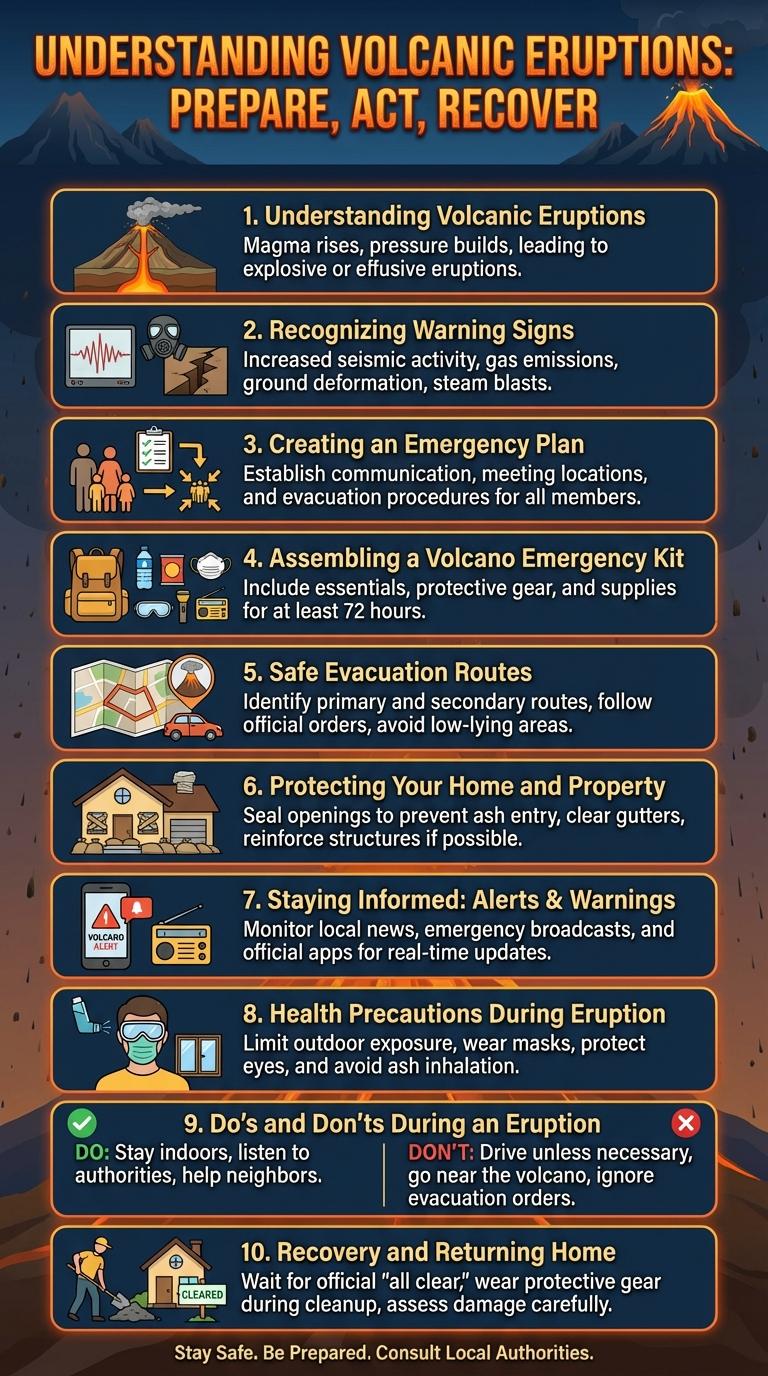
Volcanic eruption preparedness is essential for minimizing risks and safeguarding lives in volcanic regions. Understanding evacuation routes, emergency kits, and communication plans can significantly improve response effectiveness during an eruption. Proper readiness ensures communities remain informed and resilient when facing volcanic hazards.
Understanding Volcanic Eruptions
Volcanic eruptions release magma, ash, and gases from beneath the Earth's surface, posing significant hazards to nearby communities. Understanding the types of eruptions, such as explosive or effusive, helps in assessing risk levels and necessary safety measures.
Monitoring volcanic activity involves tracking seismic activity, gas emissions, and ground deformation to predict possible eruptions. Awareness of eruption signs enables timely evacuation and preparation to reduce casualties and property damage.
Recognizing Warning Signs
Volcanic eruption preparedness begins with recognizing early warning signs like increased seismic activity and gas emissions. Monitoring these indicators helps communities take timely action to reduce risks.
Visible changes such as ground swelling or unusual animal behavior are critical signals of potential eruptions. Awareness of these signs allows for faster evacuation and improved safety measures.
Creating an Emergency Plan
Preparing for a volcanic eruption requires a well-structured emergency plan tailored to your family's needs. Developing a clear plan enhances safety and ensures a rapid response during an eruption.
- Identify Evacuation Routes - Research and map multiple safe routes away from potential lava flows and ashfall zones to ensure quick evacuation.
- Assemble Emergency Supplies - Gather necessary items like water, food, masks, and first aid kits to sustain your family during and after the eruption.
- Establish Communication Plans - Designate meeting points and emergency contacts to keep loved ones informed and connected in case of separation.
Assembling a Volcano Emergency Kit
What essential items should be included in a volcano emergency kit? A well-prepared kit ensures safety and survival during a volcanic eruption. Key supplies like masks, water, and a flashlight are crucial for immediate response.
How much water is recommended for a volcano emergency kit? Experts suggest storing at least one gallon of water per person per day for a minimum of three days. Clean water supports hydration and hygiene when access is limited.
Why are masks important in a volcano emergency kit? Masks protect against volcanic ash inhalation, which can cause respiratory issues. N95 or similar masks are most effective for filtering fine ash particles.
Which tools improve communication and safety during a volcanic eruption? A battery-powered or hand-crank radio provides vital updates when other communication means fail. Flashlights and extra batteries help navigate dark or ash-covered environments.
What food supplies should be packed in a volcano emergency kit? Non-perishable foods like canned goods, energy bars, and dried fruits provide essential nutrition. These items have long shelf lives, supporting sustained energy needs during emergencies.
Safe Evacuation Routes
Safe evacuation routes are critical for protecting lives during a volcanic eruption. Knowing these routes in advance helps avoid hazardous areas and ensures quick, organized evacuation.
- Identify Multiple Routes - Familiarize yourself with at least two evacuation paths to avoid blocked roads or sudden hazards.
- Follow Official Signage - Use signs and directions provided by emergency services to stay on safe roads away from lava flows and ash clouds.
- Practice Route Drills - Regularly rehearse evacuation drills with your family to improve readiness and reduce panic during an emergency.
Protecting Your Home and Property
Secure your home by sealing windows and doors to prevent ash from entering. Clear gutters and drains to avoid blockages during ashfall. Store emergency supplies such as masks, flashlights, and water in easily accessible locations.
Staying Informed: Alerts & Warnings
Stay informed about volcanic eruptions by signing up for local alert systems and monitoring official sources such as the US Geological Survey (USGS) and National Oceanic and Atmospheric Administration (NOAA). Timely alerts provide critical information on eruption status, ashfall, and evacuation orders to ensure safety. Regularly review emergency plans and update communication devices to receive notifications without delay.
Health Precautions During Eruption
Volcanic eruptions pose serious health risks from ash inhalation and toxic gases. Proper health precautions can minimize respiratory and skin issues during an eruption.
- Wear masks - Use N95 masks to filter out volcanic ash and harmful particles from air.
- Protect eyes - Wear goggles to prevent ash and debris irritation and injury.
- Stay indoors - Limit exposure by staying inside with windows closed to avoid ash and gas inhalation.
Following these health precautions reduces risks and supports safety during volcanic eruptions.
Do's and Don'ts During an Eruption
Volcanic eruptions pose significant risks including lava flows, ash fall, and pyroclastic flows. Being prepared and knowing the right actions can save lives and reduce injuries during an eruption.
Do follow official evacuation orders immediately to ensure safety. Do protect your respiratory system by wearing masks or cloth over your nose and mouth. Do stay indoors to avoid ash exposure and collapse risks from roof ash accumulation.