
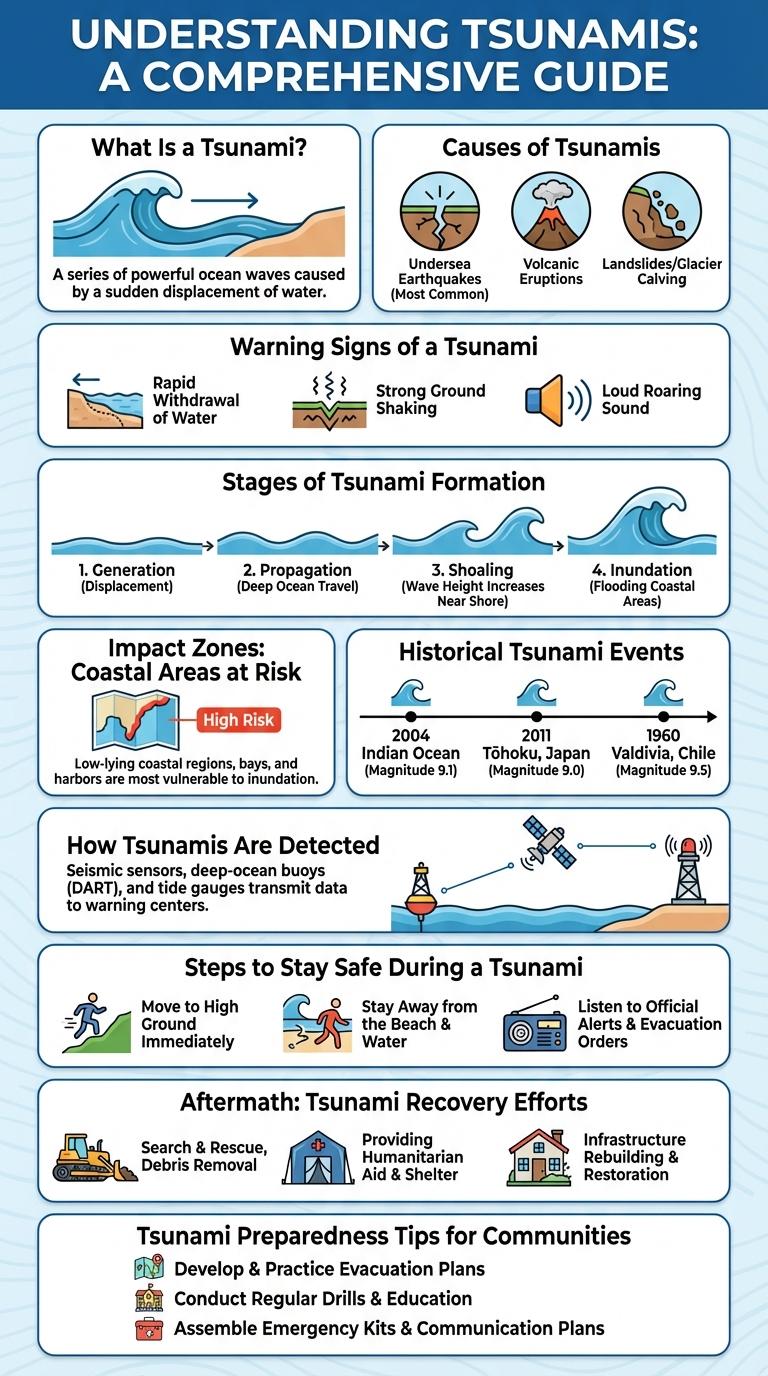
Tsunami infographics visually represent the causes, effects, and safety measures related to these powerful ocean waves. They simplify complex data through charts, maps, and illustrations to enhance understanding. Such examples help raise awareness and promote preparedness in vulnerable coastal communities.
What Is a Tsunami?
A tsunami is a series of ocean waves caused by large underwater disturbances. These waves can travel at high speeds and cause significant coastal damage.
- Causes - Tsunamis are triggered mainly by underwater earthquakes, volcanic eruptions, or landslides.
- Wave Behavior - Tsunami waves increase in height as they approach shallow coastal waters.
- Impact - The powerful waves can flood coastal areas, leading to property damage and loss of life.
Causes of Tsunamis
Tsunamis are large ocean waves caused by underwater seismic activity. The most common triggers include earthquakes, volcanic eruptions, and underwater landslides.
When tectonic plates suddenly shift, they displace a massive volume of water. This displacement generates powerful waves that travel rapidly across oceans, causing widespread destruction upon reaching coastlines.
Warning Signs of a Tsunami
Tsunamis are powerful ocean waves usually caused by underwater earthquakes or volcanic eruptions. Warning signs include a rapid and unusual withdrawal of the sea, a loud roar from the ocean, and ground shaking near coastal areas. Recognizing these signs early can save lives by allowing time for evacuation to higher ground.
Stages of Tsunami Formation
What are the stages of tsunami formation? Tsunamis form through a series of natural processes triggered by underwater disturbances. Understanding these stages helps in disaster preparedness and response.
| Stage | Description |
|---|---|
| 1. Trigger Event | Underwater earthquakes, volcanic eruptions, or landslides displace large volumes of water. |
| 2. Wave Generation | Displaced water forms waves that travel rapidly across the ocean at high speeds. |
| 3. Wave Propagation | Waves move across deep ocean with low amplitude but high speed, often hundreds of kilometers per hour. |
| 4. Wave Shoaling | As waves approach shallower coastal waters, wave height increases dramatically. |
| 5. Landfall and Inundation | Tsunami waves crash onto the shore, causing flooding and structural damage to coastal areas. |
Impact Zones: Coastal Areas at Risk
Tsunamis primarily threaten coastal areas, where the impact can be devastating. These natural disasters cause rapid flooding and strong currents, posing severe risks to communities and infrastructure.
Coastal regions near tectonic plate boundaries are at the highest risk due to frequent seismic activity. Low-lying beaches, river mouths, and bays experience significant damage during tsunami events. Early warning systems and evacuation plans are critical in minimizing loss of life in these vulnerable zones.
Historical Tsunami Events
Tsunamis have caused significant destruction throughout history, triggered primarily by underwater earthquakes and volcanic eruptions. Understanding historical events helps in predicting and preparing for future tsunamis.
- 2004 Indian Ocean Tsunami - Caused by a magnitude 9.1 earthquake, it resulted in over 230,000 deaths across 14 countries.
- 2011 Tohoku Tsunami - Triggered by a magnitude 9.0 earthquake off Japan's coast, it caused massive damage and led to the Fukushima nuclear disaster.
- 1755 Lisbon Tsunami - Following a major earthquake, the tsunami devastated Lisbon, Portugal, and influenced European earthquake studies.
Historical tsunami events emphasize the importance of early warning systems and disaster readiness worldwide.
How Tsunamis Are Detected
Tsunamis are detected using a combination of seismic activity monitoring and ocean-based sensors. Seismographs first identify underwater earthquakes that could potentially generate tsunamis.
DART (Deep-ocean Assessment and Reporting of Tsunamis) buoys measure changes in sea level and pressure to detect tsunami waves in real time. This data is transmitted to warning centers to alert coastal regions quickly.
Steps to Stay Safe During a Tsunami
A tsunami is a series of powerful ocean waves caused by underwater earthquakes or volcanic eruptions. When a tsunami warning is issued, immediately move to higher ground or inland to avoid flooding and strong currents. Stay informed through official alerts and do not return until authorities declare the area safe.
| Step | Action |
|---|---|
| 1 | Evacuate immediately to higher ground or inland areas |
| 2 | Listen to emergency broadcasts for updates and instructions |
| 3 | Do not go to the coast to watch the waves |
| 4 | Wait for an official "all clear" before returning home |
| 5 | Prepare an emergency kit with essentials like water, food, and medications |
Aftermath: Tsunami Recovery Efforts
| Recovery Aspect | Details |
|---|---|
| Immediate Response | Rescue operations, medical aid, and provision of emergency supplies within the first 72 hours |
| Infrastructure Reconstruction | Rebuilding homes, schools, roads, and utilities with improved disaster-resilient designs |
| Environmental Restoration | Cleanup of debris, reforestation, and restoration of coastal ecosystems to prevent future damage |
| Community Support | Psychological counseling, livelihood programs, and community engagement initiatives for affected populations |
| Disaster Preparedness | Development of early warning systems, evacuation plans, and public education campaigns |