
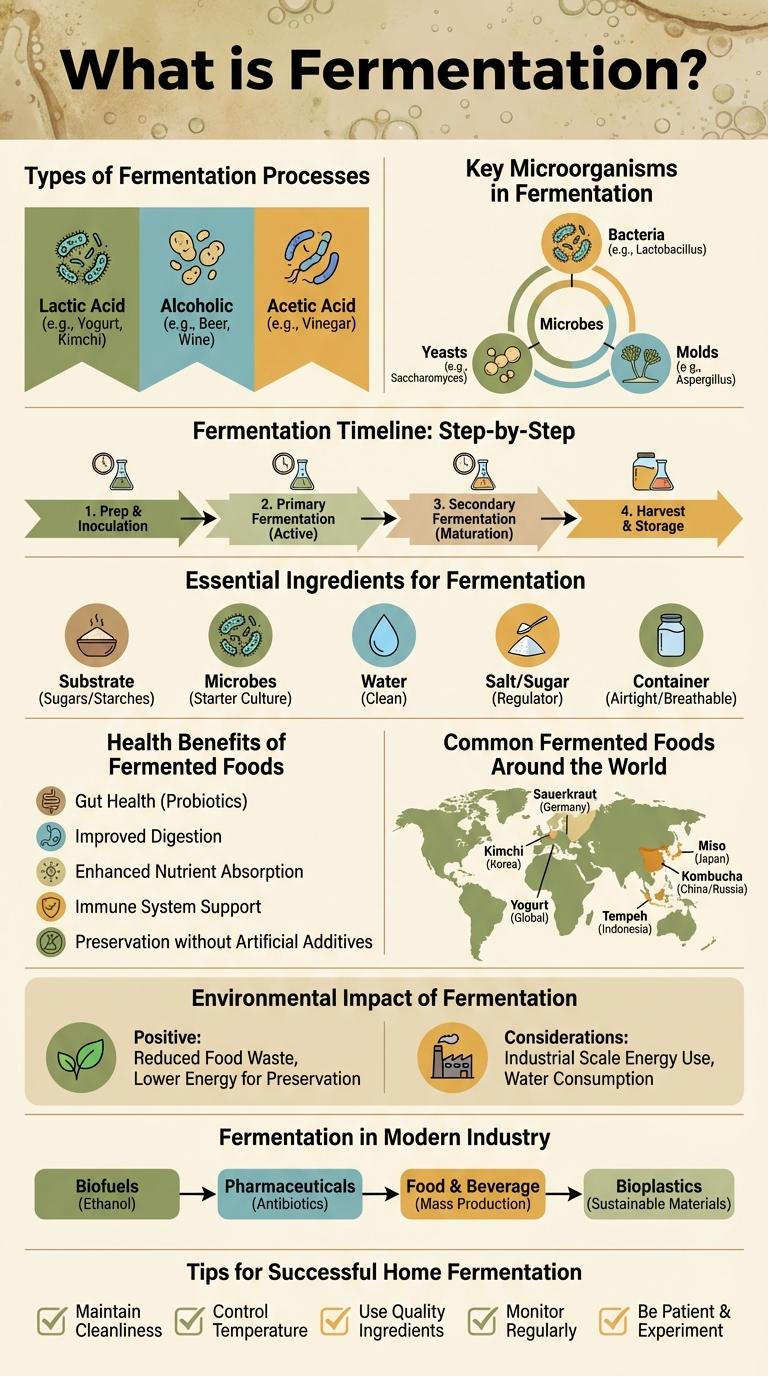
Fermentation is a natural process that transforms sugars into alcohol or acids using yeast and bacteria, playing a vital role in food preservation and flavor development. This infographic highlights the key steps, types, and benefits of fermentation in various culinary and industrial applications. Understanding fermentation enhances appreciation for traditional foods and modern biotechnological innovations.
What is Fermentation?
Fermentation is a metabolic process that converts sugar to acids, gases, or alcohol in the absence of oxygen. It is widely used in food production and biotechnology to create products like bread, beer, and yogurt.
- Biochemical Process - Fermentation involves microorganisms such as yeast and bacteria breaking down carbohydrates anaerobically.
- Types of Fermentation - Common types include lactic acid fermentation and alcoholic fermentation based on end products.
- Industrial Applications - Fermentation is essential for producing ethanol, pharmaceuticals, and fermented foods globally.
Types of Fermentation Processes
Fermentation is a metabolic process that converts sugar to acids, gases, or alcohol in the absence of oxygen. It plays a crucial role in food production, biofuel generation, and pharmaceuticals.
Common types of fermentation include alcoholic fermentation, lactic acid fermentation, acetic acid fermentation, and mixed acid fermentation. Each type produces specific end products and occurs in different microorganisms or conditions.
Key Microorganisms in Fermentation
What are the key microorganisms involved in fermentation? Microorganisms such as yeast, lactic acid bacteria, and acetic acid bacteria play essential roles in various fermentation processes. These microbes convert sugars into alcohol, acids, and gases, which preserve food and enhance flavors.
Fermentation Timeline: Step-by-Step
Fermentation is an ancient metabolic process that converts sugars into acids, gases, or alcohol using yeast, bacteria, or fungi. This biochemical reaction plays a crucial role in food production, preservation, and biotechnology.
The fermentation timeline involves distinct stages starting with glycolysis, where glucose breaks down into pyruvate. Next, pyruvate transforms into various end products depending on the organism and conditions.
During the lag phase, microbial cells adapt to the environment and prepare enzymes for fermentation. The exponential phase follows, marked by rapid production of fermentation products.
After peak activity, the stationary phase limits fermentation as nutrients deplete and waste accumulates. Finally, the decline phase sees reduced microbial activity and stabilization of the final product.
Essential Ingredients for Fermentation
Fermentation is a metabolic process that converts sugars into acids, gases, or alcohol using microorganisms like yeast and bacteria. It requires specific ingredients to create the right environment for these microbes to thrive and produce desired products.
- Microorganisms - Yeast or bacteria initiate and sustain the fermentation process by breaking down sugars.
- Sugars - Serve as the primary food source for microorganisms, enabling fermentation to occur.
- Moisture - Provides the necessary medium for microbial activity and nutrient transport.
- Temperature - Controls the rate of fermentation by influencing microbial growth and metabolism.
- Oxygen Levels - Anaerobic or aerobic conditions determine the type of fermentation and final product.
Health Benefits of Fermented Foods
Fermentation is a natural process that transforms food through beneficial microbes. This process enhances flavor, preservation, and nutritional value of various foods.
- Improves Digestive Health - Fermented foods contain probiotics that support a balanced gut microbiome and aid digestion.
- Boosts Immune System - Regular consumption strengthens immunity by promoting beneficial bacteria in the gut.
- Increases Nutrient Absorption - Fermentation breaks down antinutrients, making vitamins and minerals easier to absorb.
Including fermented foods like yogurt, kimchi, and sauerkraut can contribute to overall well-being and disease prevention.
Common Fermented Foods Around the World
| Fermented Food | Region/Country |
|---|---|
| Kimchi | South Korea |
| Sauerkraut | Germany |
| Yogurt | Global |
| Miso | Japan |
| Kefir | Caucasus Region |
Environmental Impact of Fermentation
Fermentation reduces greenhouse gas emissions by enabling the production of biofuels and biodegradable plastics from renewable resources. This process lowers reliance on fossil fuels, decreasing carbon footprints across various industries. Waste products from fermentation can be repurposed as fertilizers, promoting sustainable agriculture and reducing environmental pollution.
Fermentation in Modern Industry
Fermentation is a vital biochemical process used extensively in modern industry to convert sugars into alcohol, gases, or acids. This natural method plays a key role in producing a wide range of products, from beverages to biofuels.
In contemporary industrial settings, fermentation enhances food preservation and flavor development in products like yogurt, cheese, and bread. The pharmaceutical sector relies on fermentation to produce antibiotics, vaccines, and enzymes efficiently. Sustainable biofuel production also leverages fermentation to reduce reliance on fossil fuels and lower carbon emissions.