
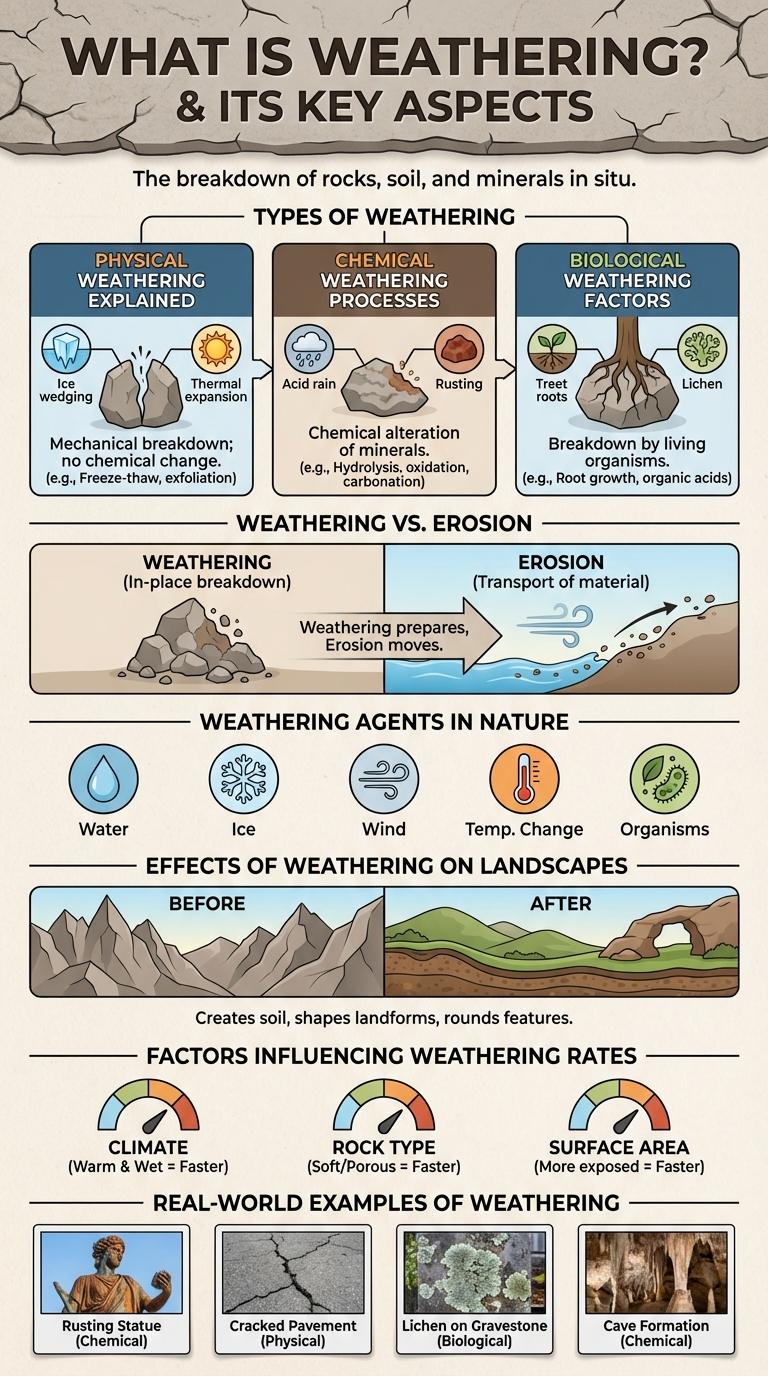
Weathering is the natural process that breaks down rocks and minerals on Earth's surface into smaller particles. This transformation occurs through physical, chemical, and biological mechanisms, reshaping landscapes over time. Understanding weathering helps explain soil formation, erosion, and the cycling of nutrients essential for ecosystems.
What is Weathering?
Weathering is the natural process that breaks down rocks and minerals on Earth's surface. It occurs through physical, chemical, and biological mechanisms that alter the material's structure.
Physical weathering involves mechanical forces such as temperature changes causing expansion and contraction. Chemical weathering results from reactions with water, oxygen, and acids that change the rock's composition.
Types of Weathering
Weathering is the natural process that breaks down rocks and minerals on Earth's surface. It contributes to soil formation and landscape changes over time.
- Physical Weathering - Mechanical breakdown of rocks through temperature changes, freeze-thaw cycles, or abrasion.
- Chemical Weathering - Decomposition of minerals by chemical reactions such as oxidation, hydrolysis, and carbonation.
- Biological Weathering - Disintegration of rocks caused by plants, animals, and microbial activity.
Physical Weathering Explained
Physical weathering breaks down rocks through mechanical processes without changing their chemical composition. This type of weathering is driven by natural forces such as temperature changes, water, ice, and wind.
Common forms include freeze-thaw cycles where water enters cracks, freezes, and expands, causing the rock to fracture. Other examples encompass exfoliation, abrasion, and root wedging that continuously weaken rock structures over time.
Chemical Weathering Processes
Chemical weathering involves the breakdown of rocks through chemical reactions, altering their mineral composition. Key processes include hydrolysis, oxidation, and carbonation, which transform minerals into more stable forms. This type of weathering is most effective in warm, moist environments where chemical reactions proceed rapidly.
Biological Weathering Factors
What are the key factors involved in biological weathering?
Biological weathering occurs when living organisms, such as plants, animals, and microbes, contribute to the breakdown of rocks and minerals. Roots growing into cracks, burrowing animals, and microbial activity all accelerate rock decomposition.
Weathering vs. Erosion
Weathering and erosion are natural processes that shape the Earth's surface. Weathering breaks down rocks into smaller particles, while erosion transports these particles to new locations.
Weathering occurs in place through physical, chemical, or biological means, causing rocks to disintegrate or decompose. Erosion involves agents like water, wind, ice, and gravity that move weathered materials across landscapes. Together, these processes contribute to soil formation and landscape changes over time.
Weathering Agents in Nature
| Weathering Agents | Description |
|---|---|
| Water | Causes chemical weathering through dissolution and hydrolysis, and physical weathering by freezing and thawing (frost wedging). |
| Oxygen | Induces oxidation, altering minerals and weakening rock structures primarily through iron oxidation (rusting). |
| Carbon Dioxide | Combines with water to form carbonic acid, which promotes chemical weathering by dissolving limestone and other carbonate rocks. |
| Plants and Organisms | Roots break rock mechanically while organic acids accelerate chemical weathering by decomposing minerals. |
| Temperature Changes | Cause expansion and contraction of rocks, leading to physical breakdown through thermal stress and exfoliation. |
Effects of Weathering on Landscapes
Weathering transforms rocks and minerals at Earth's surface, shaping diverse landscapes. It influences soil formation, land stability, and ecosystem development.
- Soil Formation - Weathering breaks down rocks into smaller particles, creating fertile soil essential for plant growth.
- Landscape Sculpting - Physical and chemical weathering carve valleys, cliffs, and other landforms over time.
- Erosion Facilitation - Weathered materials are more easily transported by wind, water, or ice, altering terrain features.
Understanding weathering effects helps predict landscape changes and manage natural resources efficiently.
Factors Influencing Weathering Rates
Weathering rates are influenced by several key factors such as climate, rock type, and surface area. Higher temperatures and increased moisture accelerate chemical weathering, while rock composition determines susceptibility to breakdown. Greater surface area exposed to weathering agents enhances the rate at which rocks disintegrate.